



5 Year Warranty
Free Shipping
Secure Payments









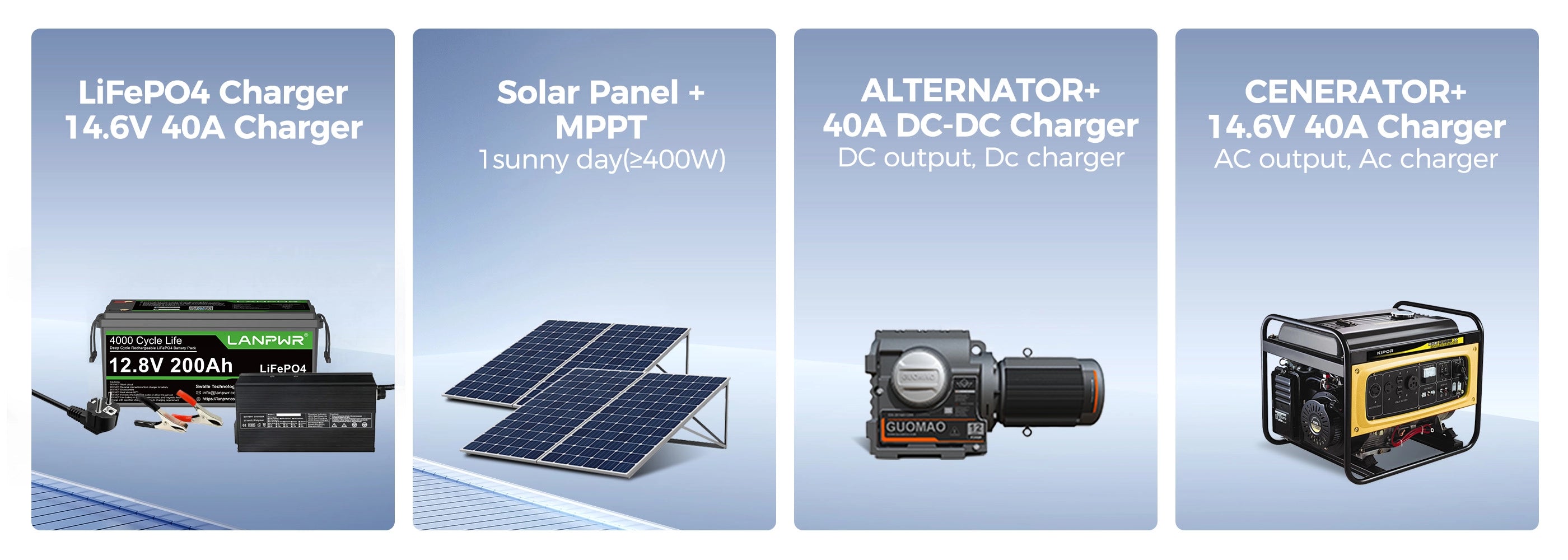

Max. Expansion (Parallel & Series):
Recommend Charge Current:
Charge Temperature:
Discharge Temperature:
Storage Temperature:
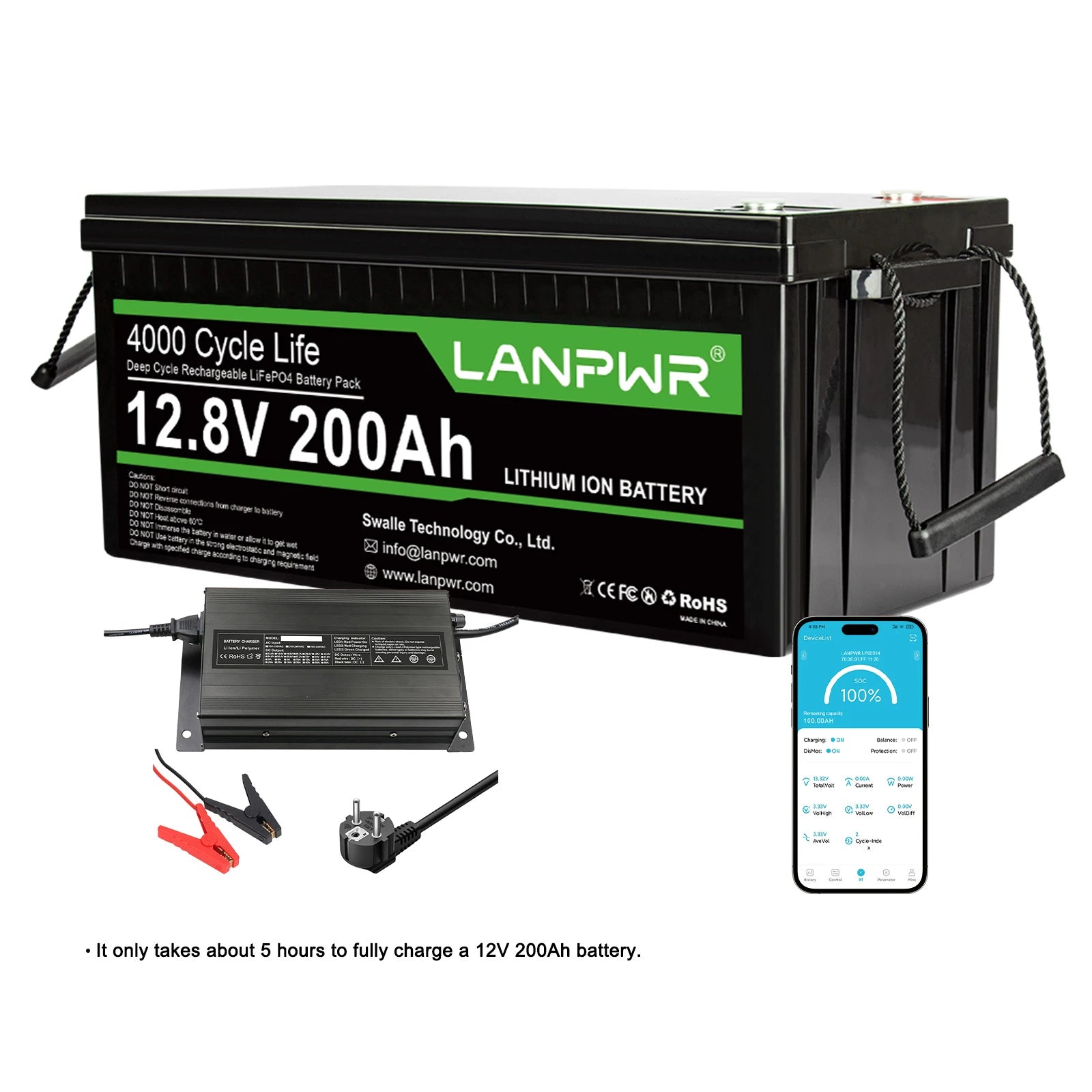
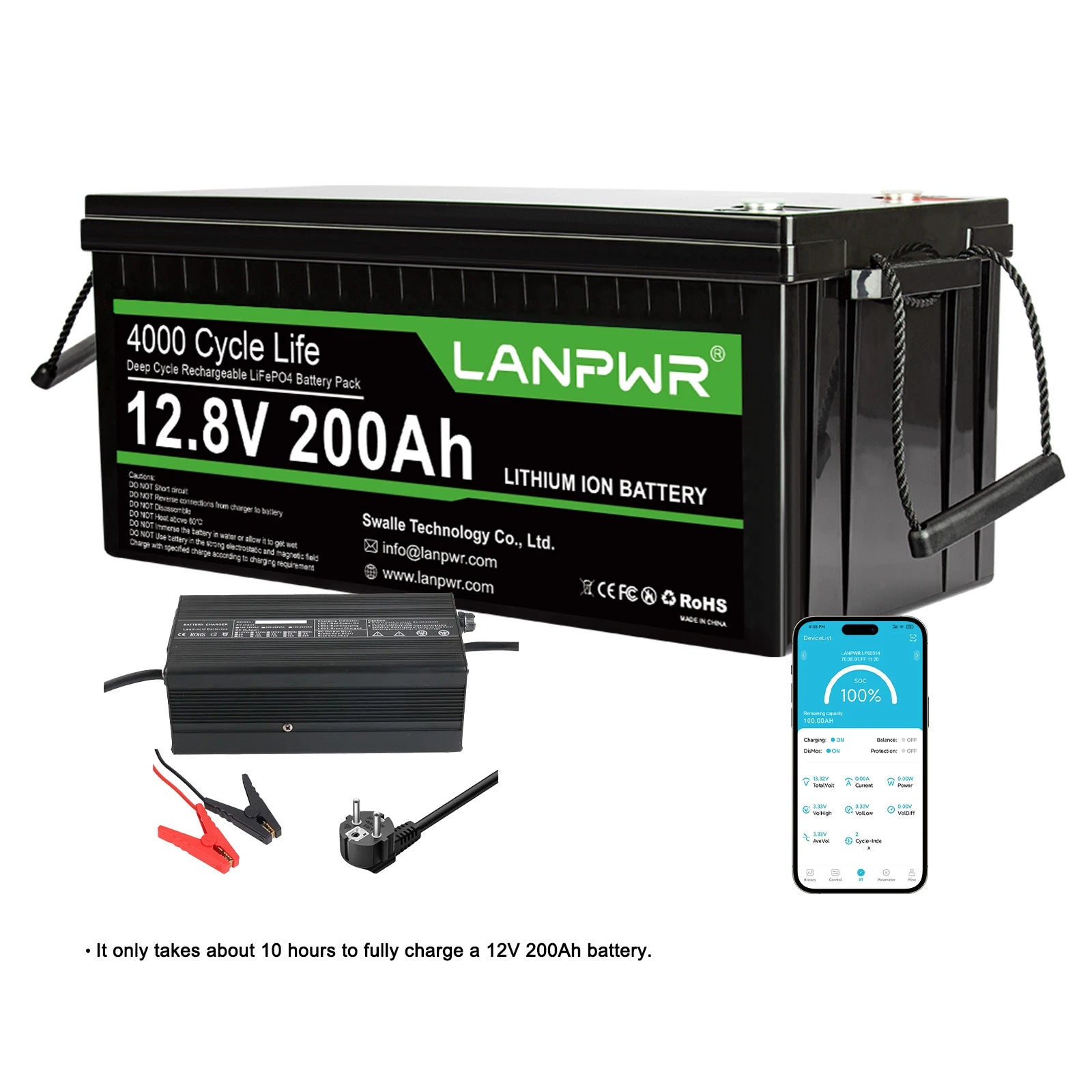
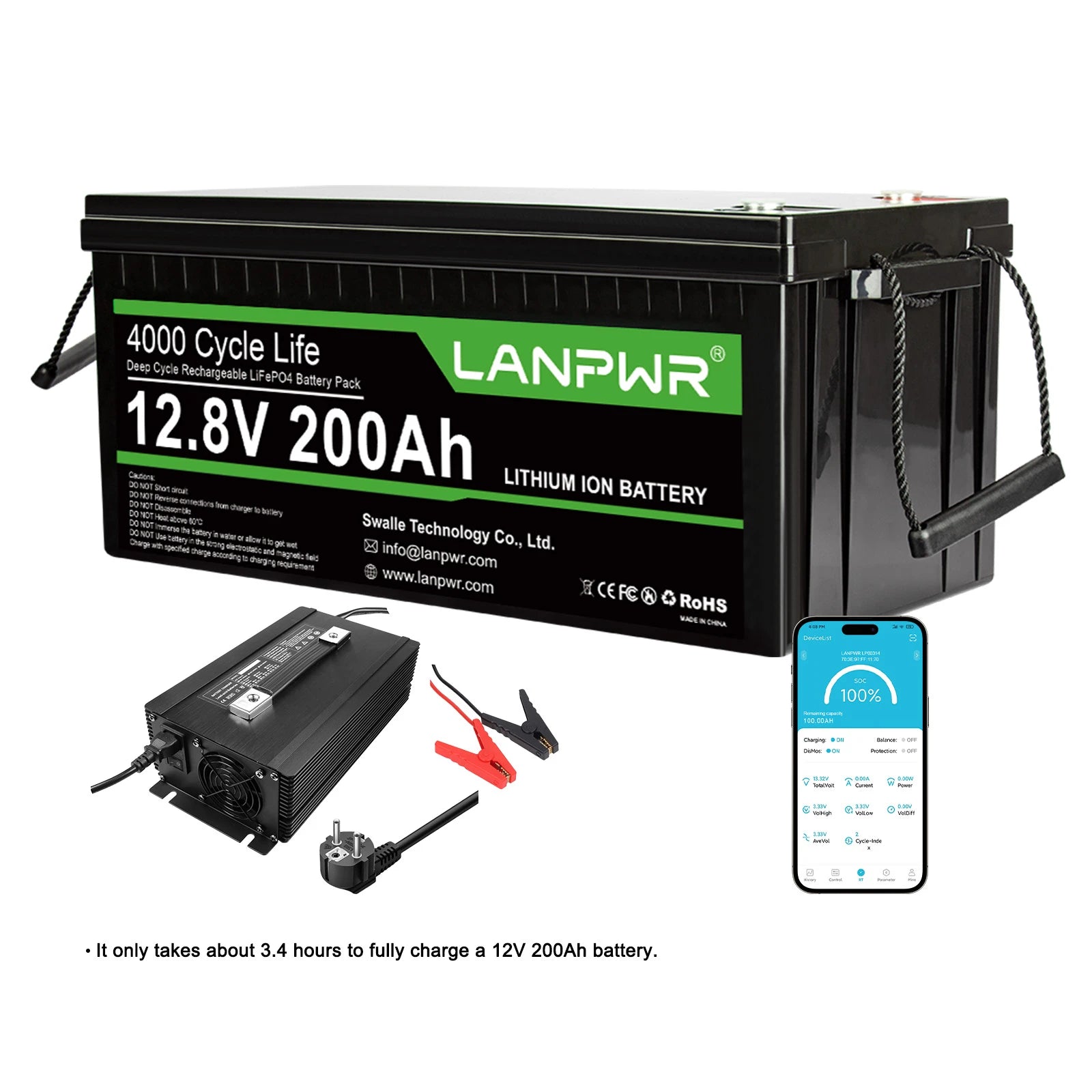
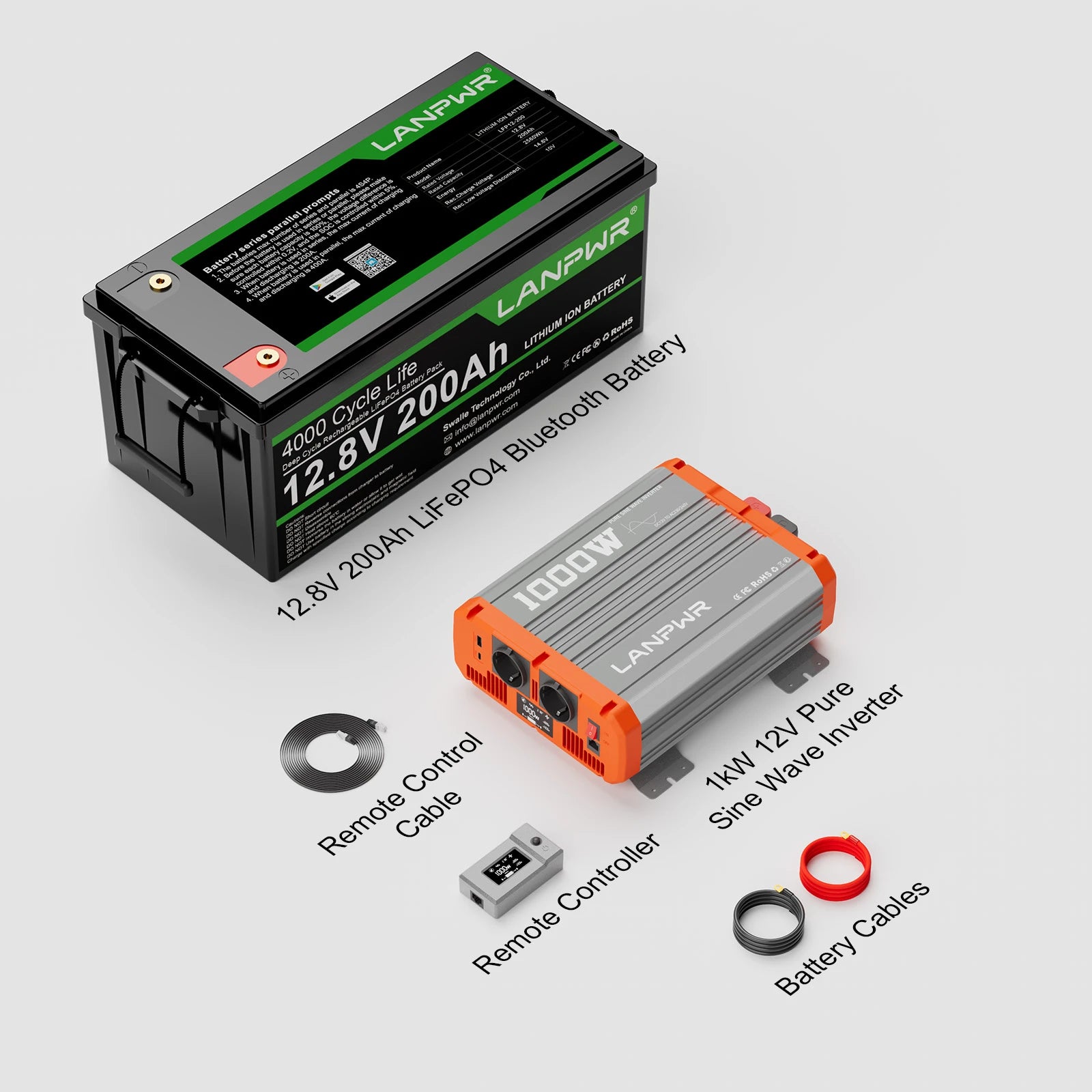
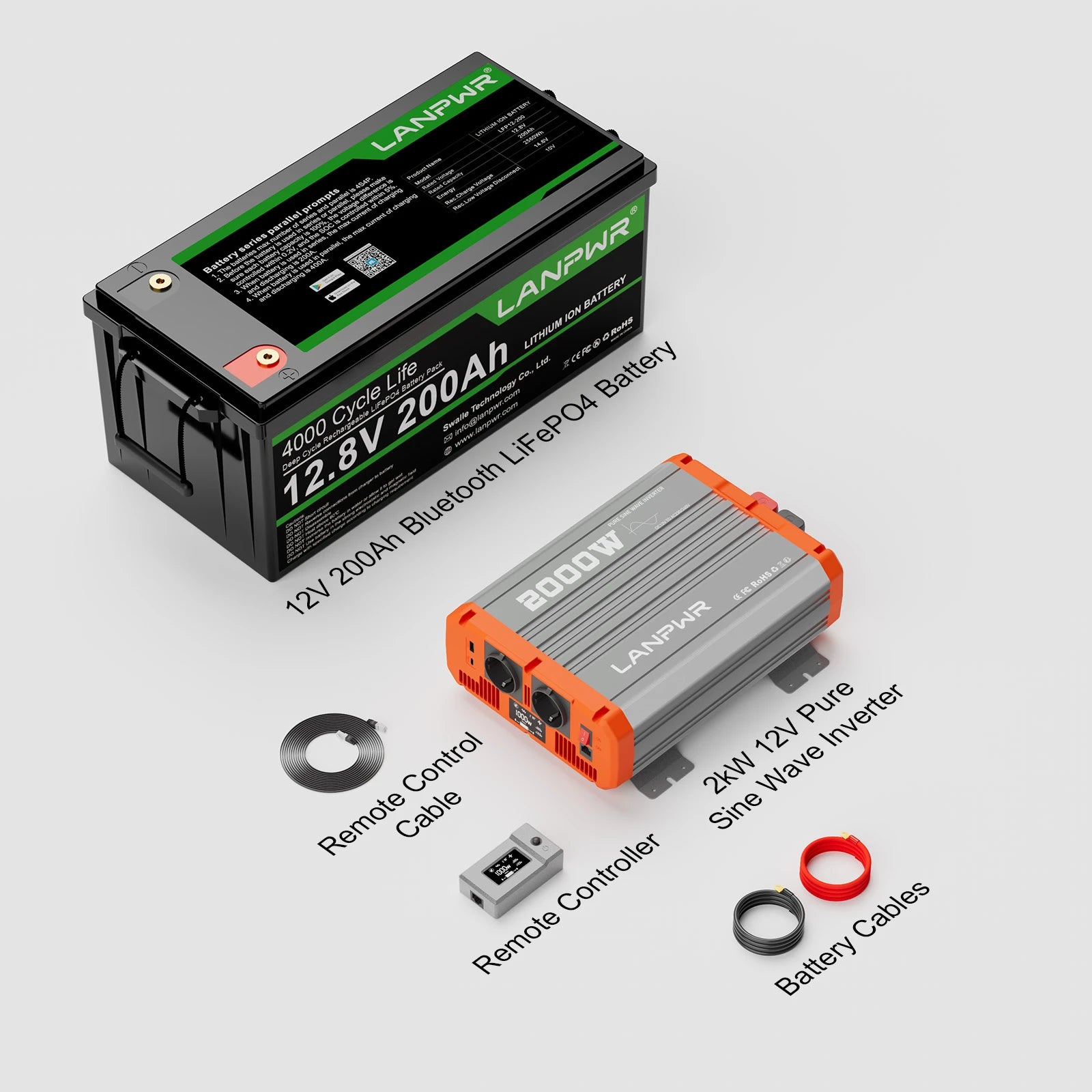
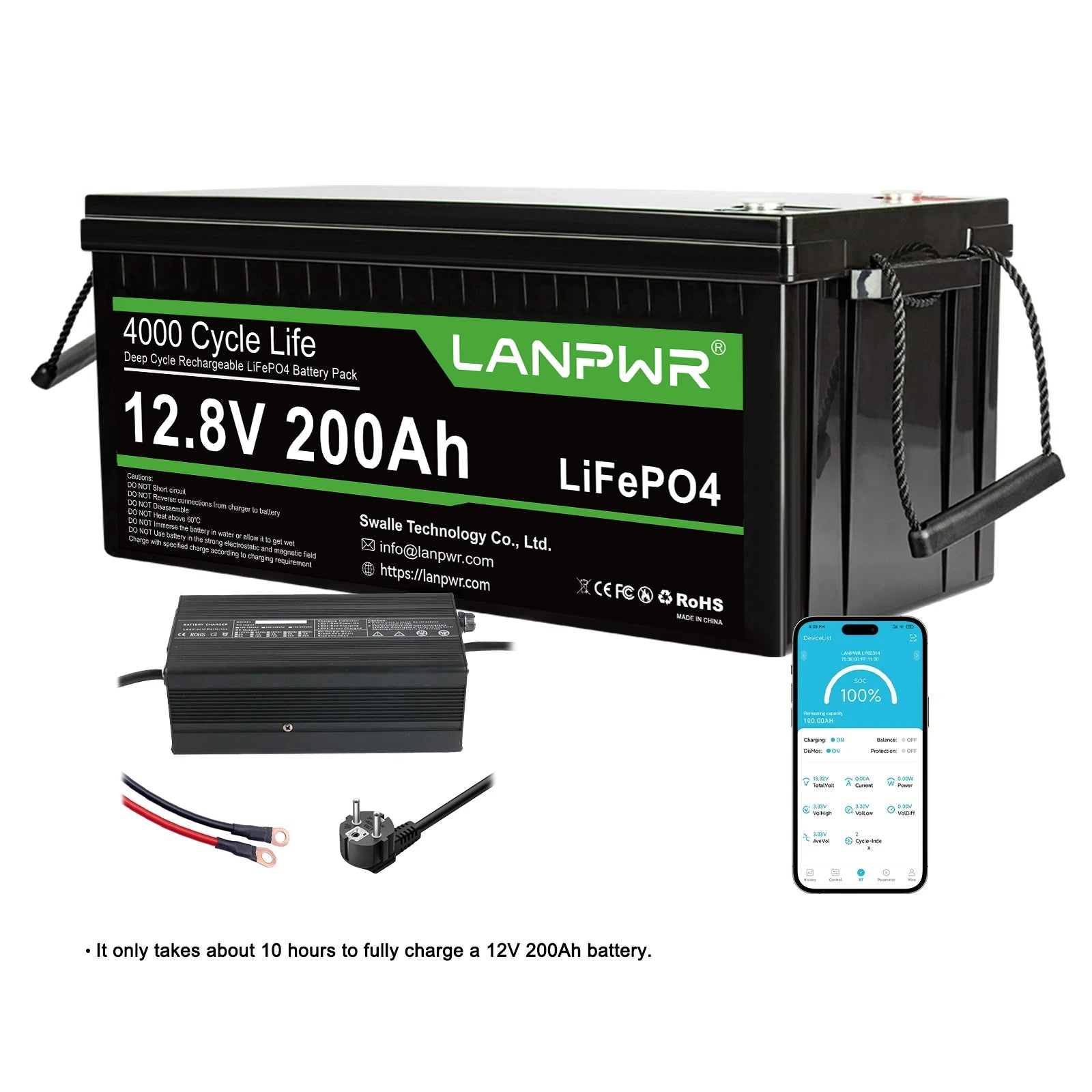
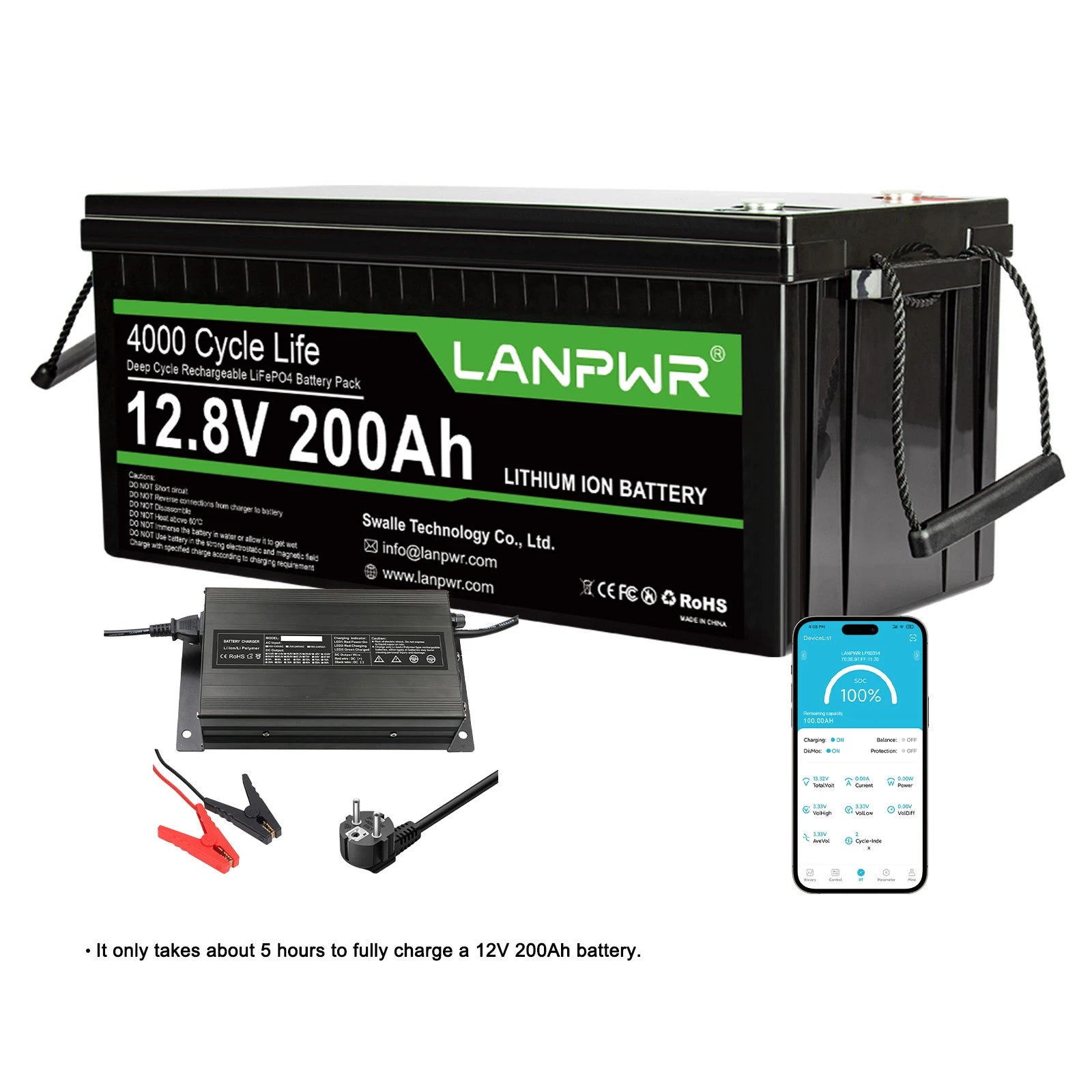
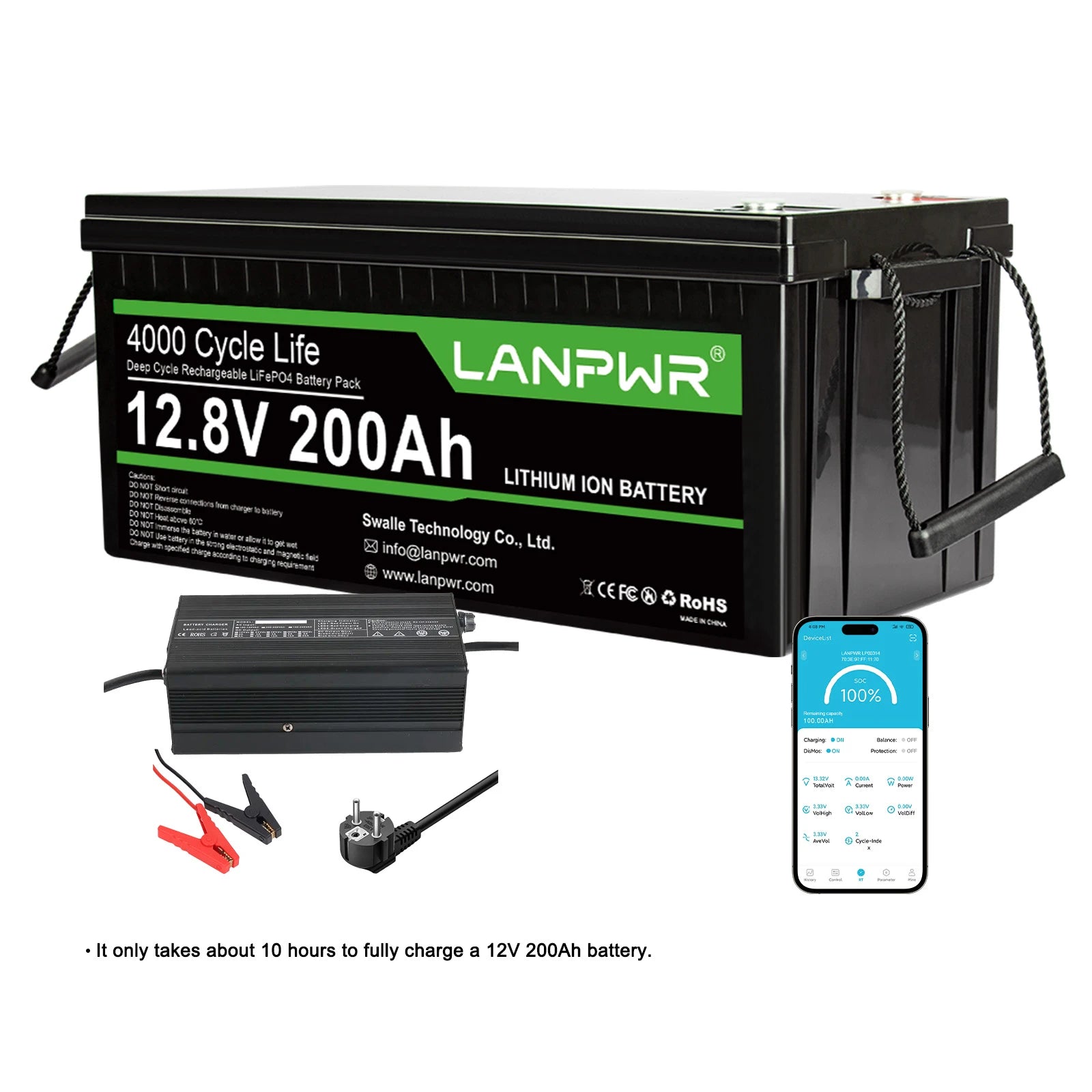
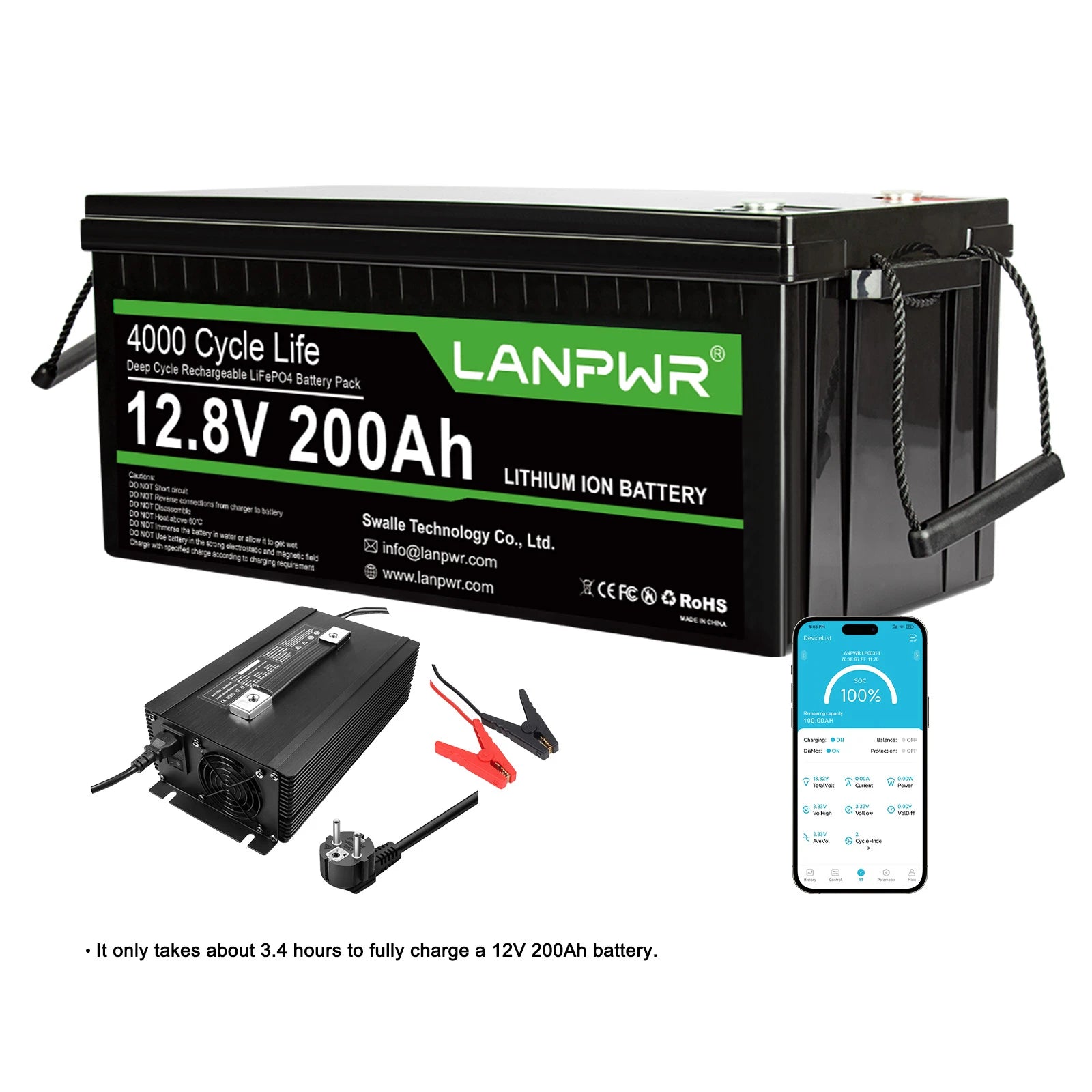
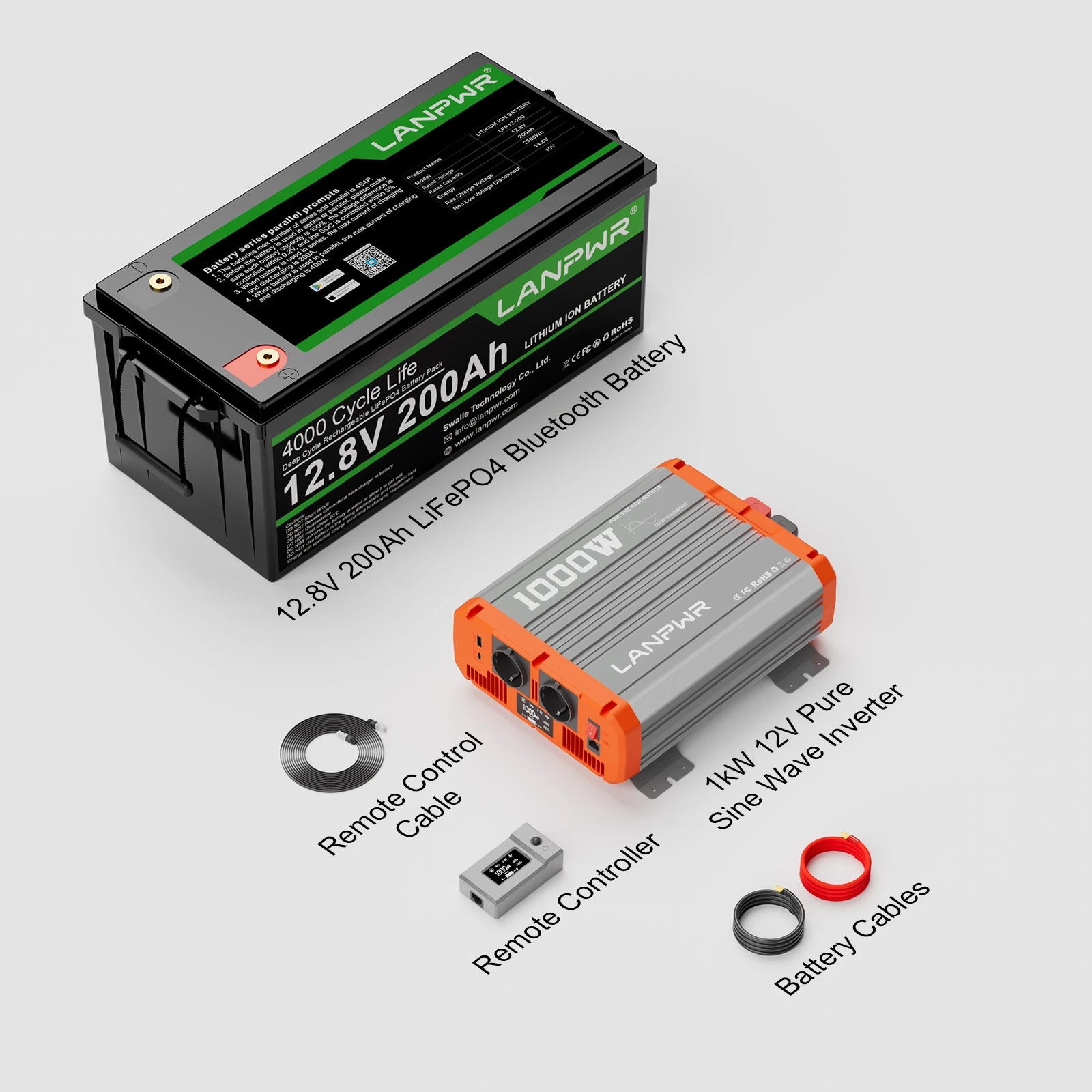
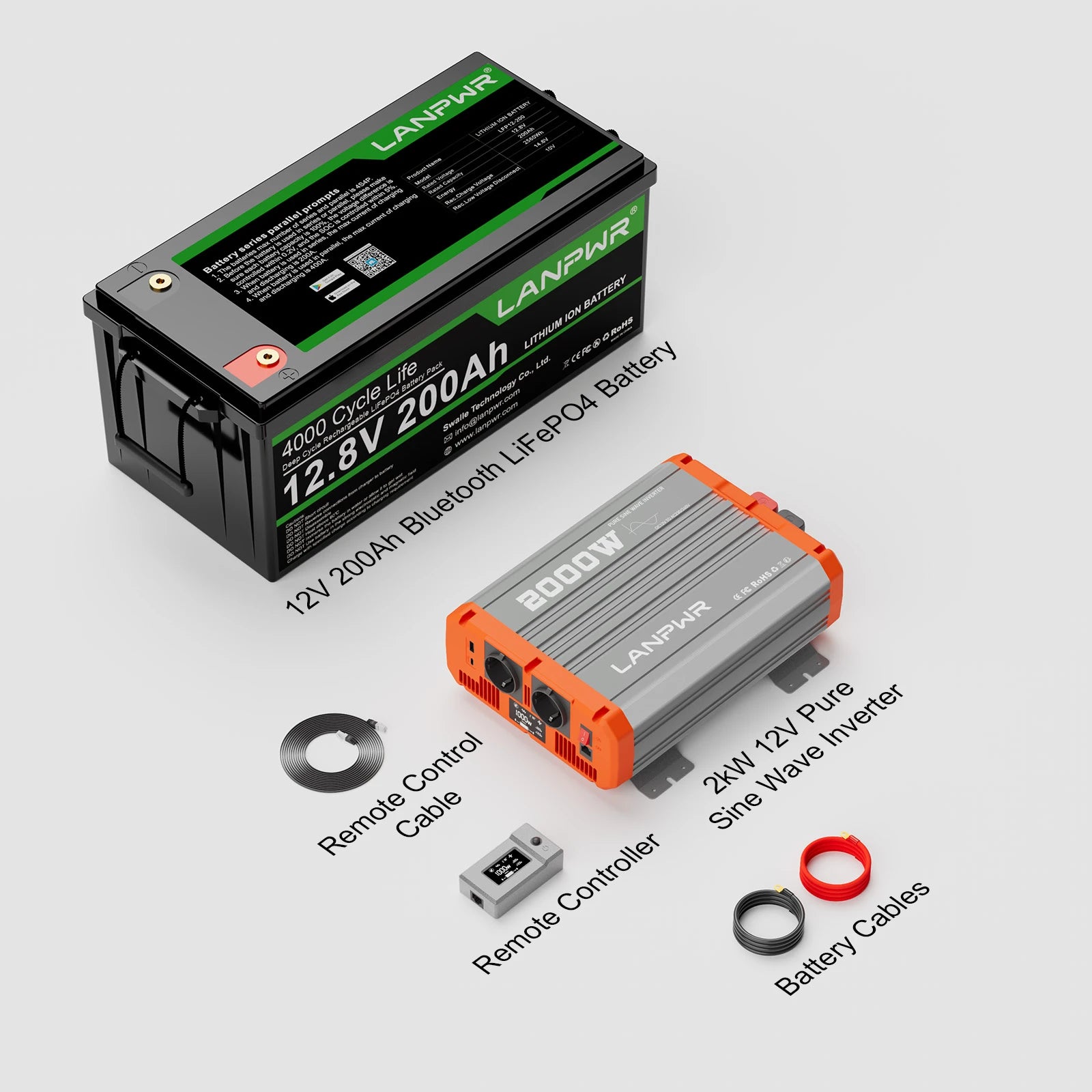
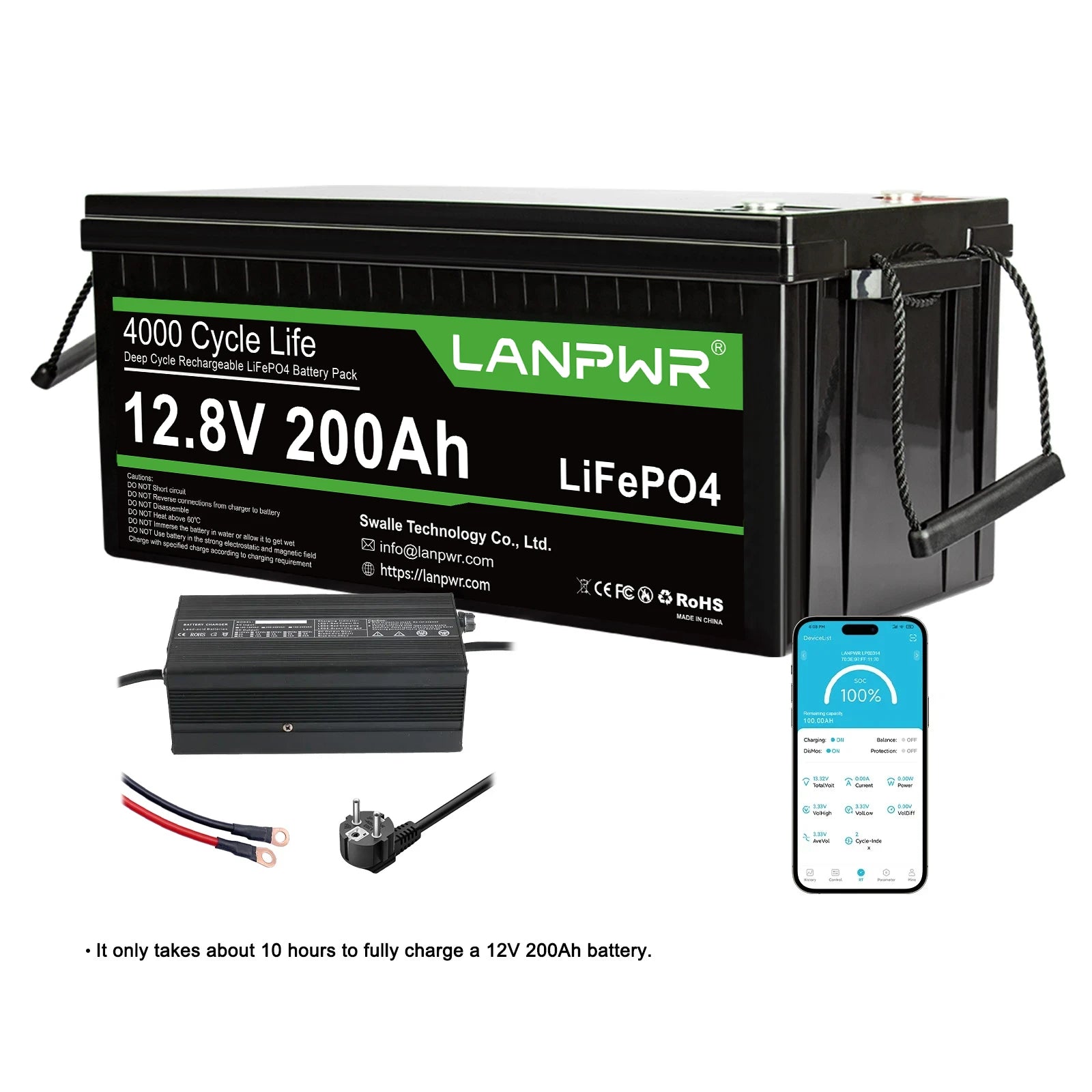
What's in the Box:
A:
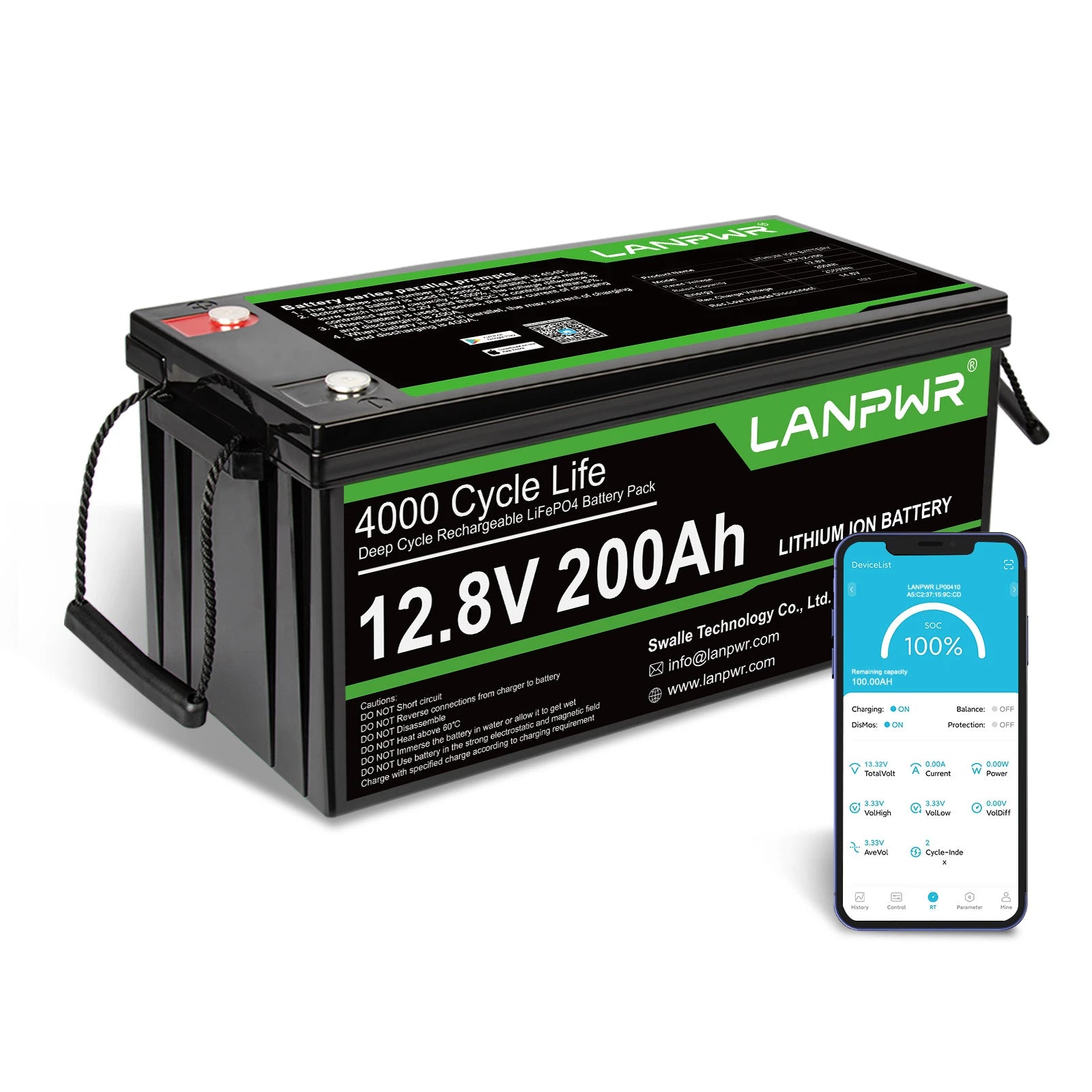
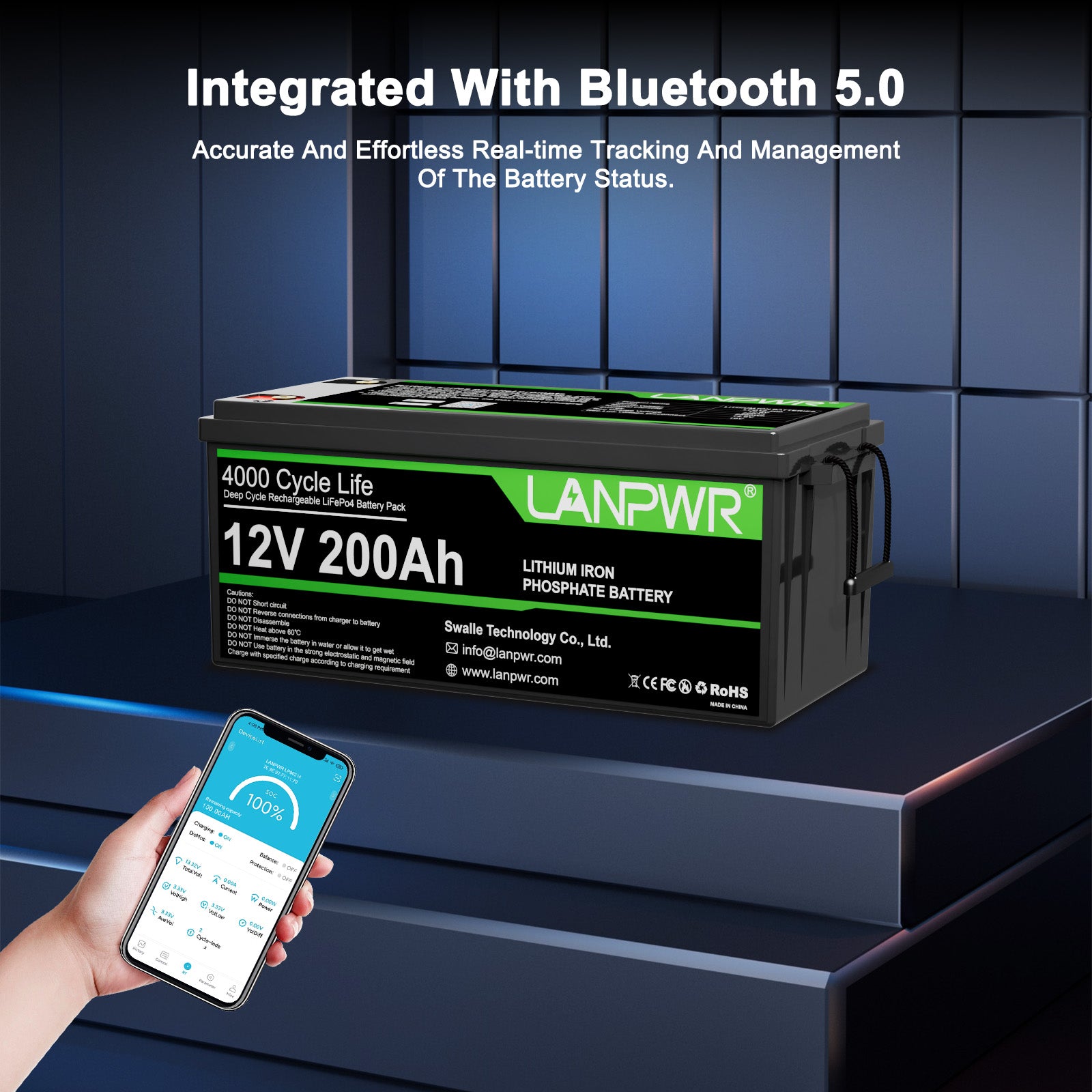
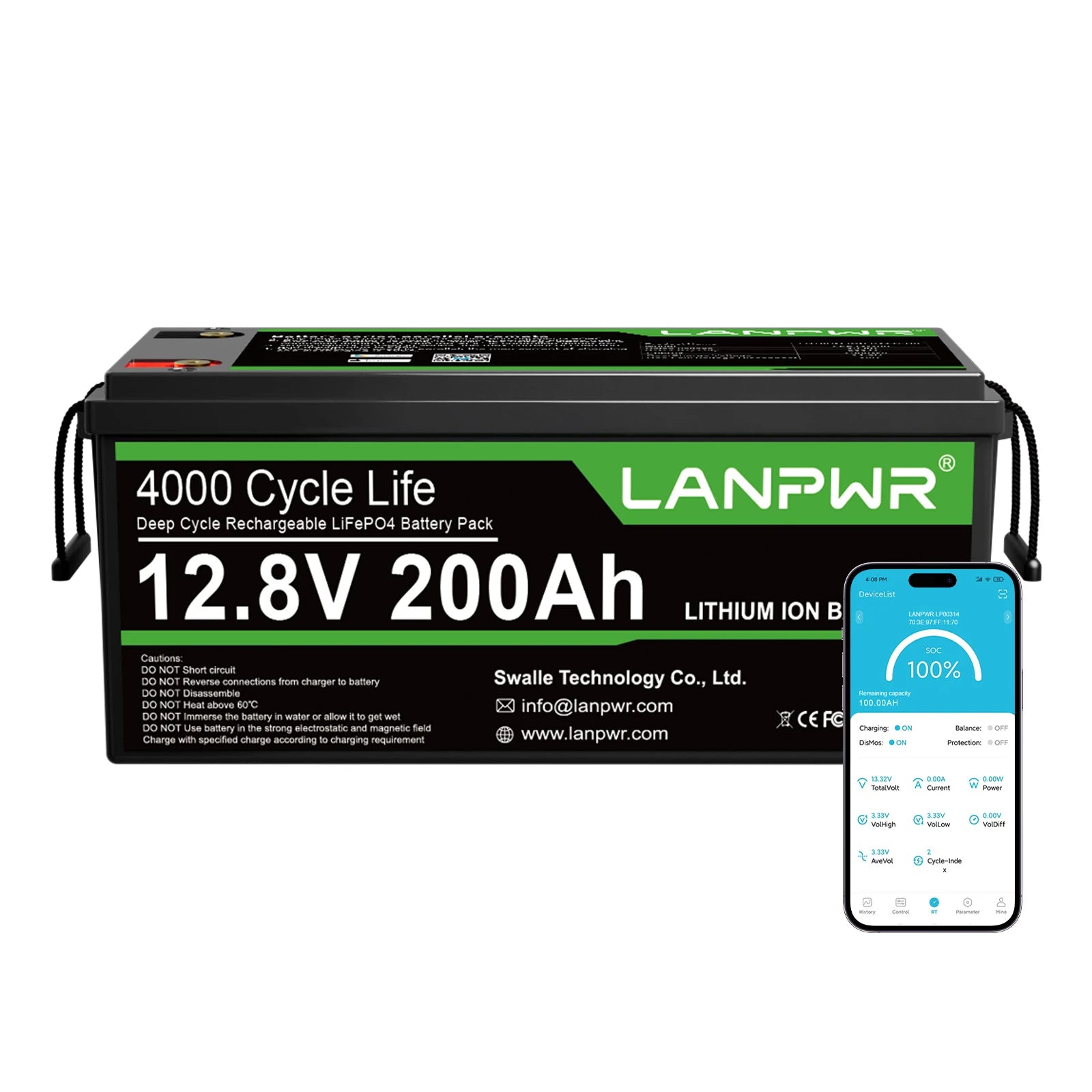
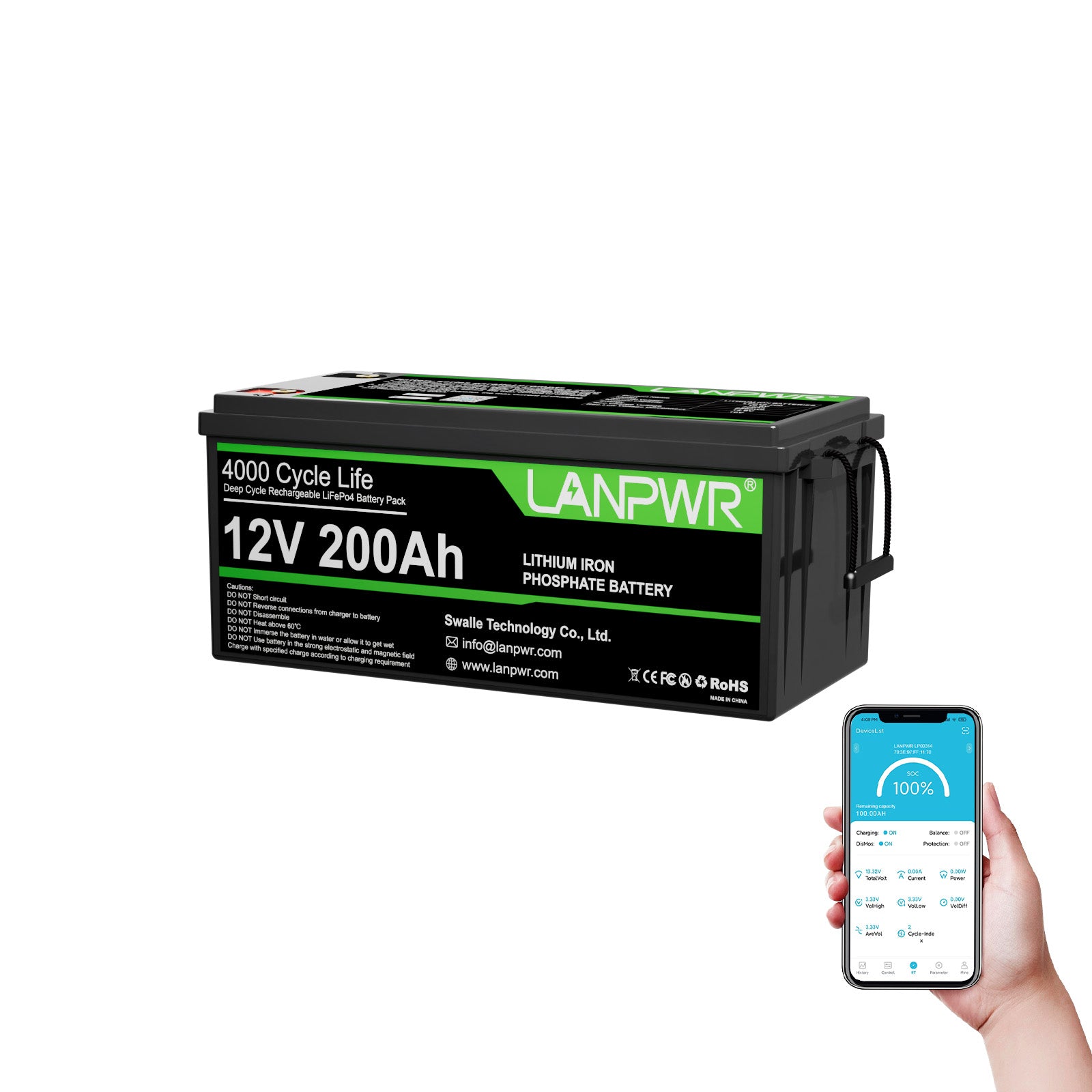
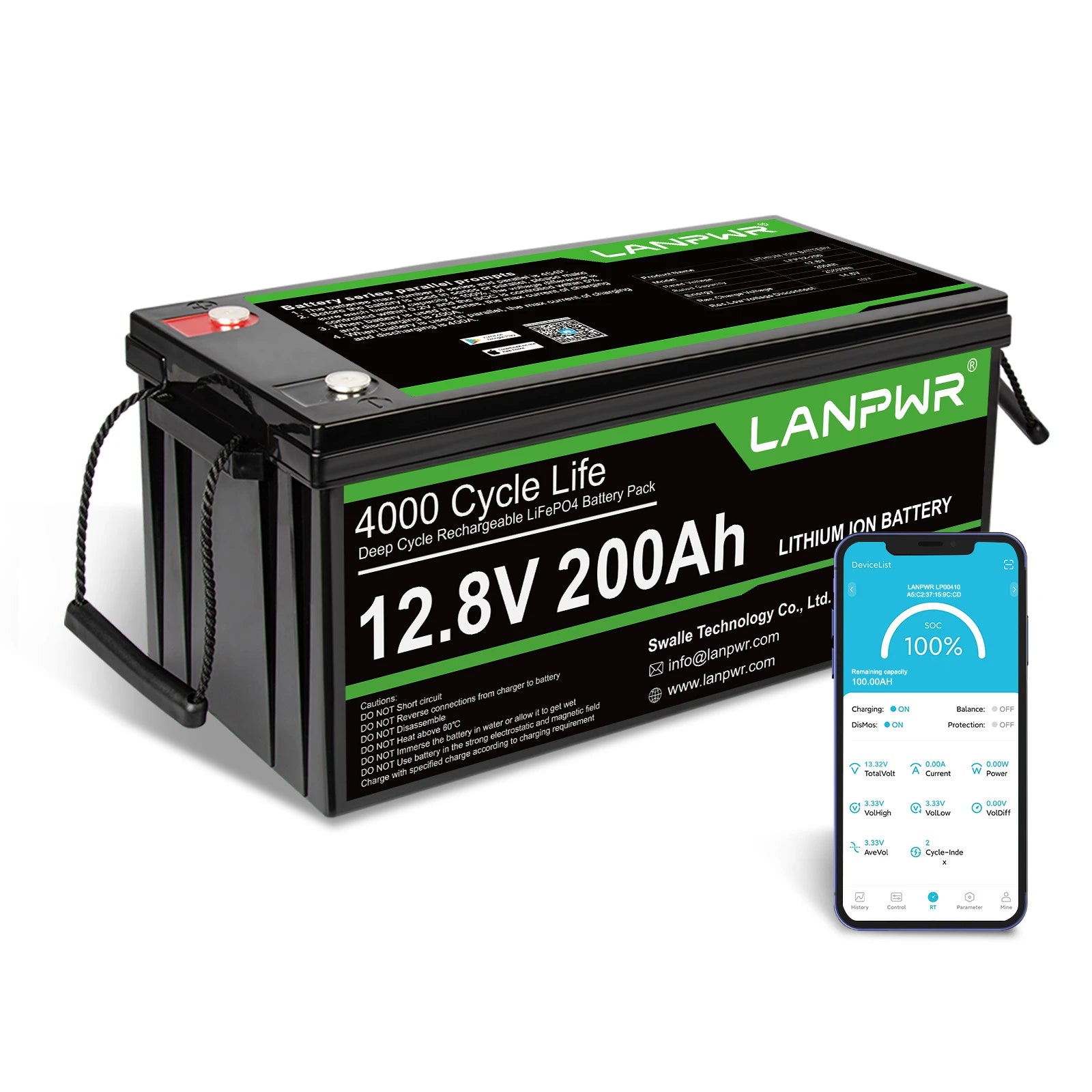
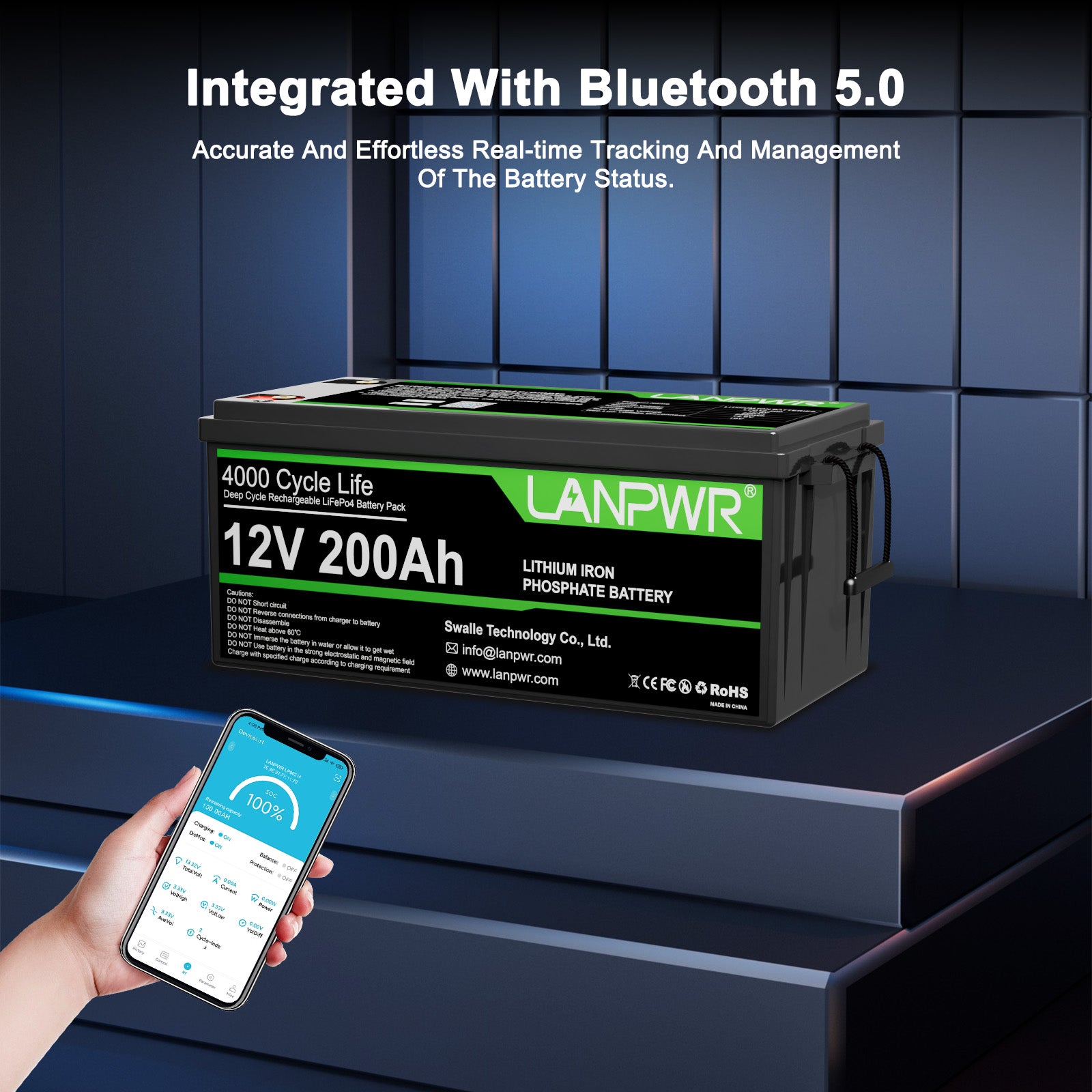
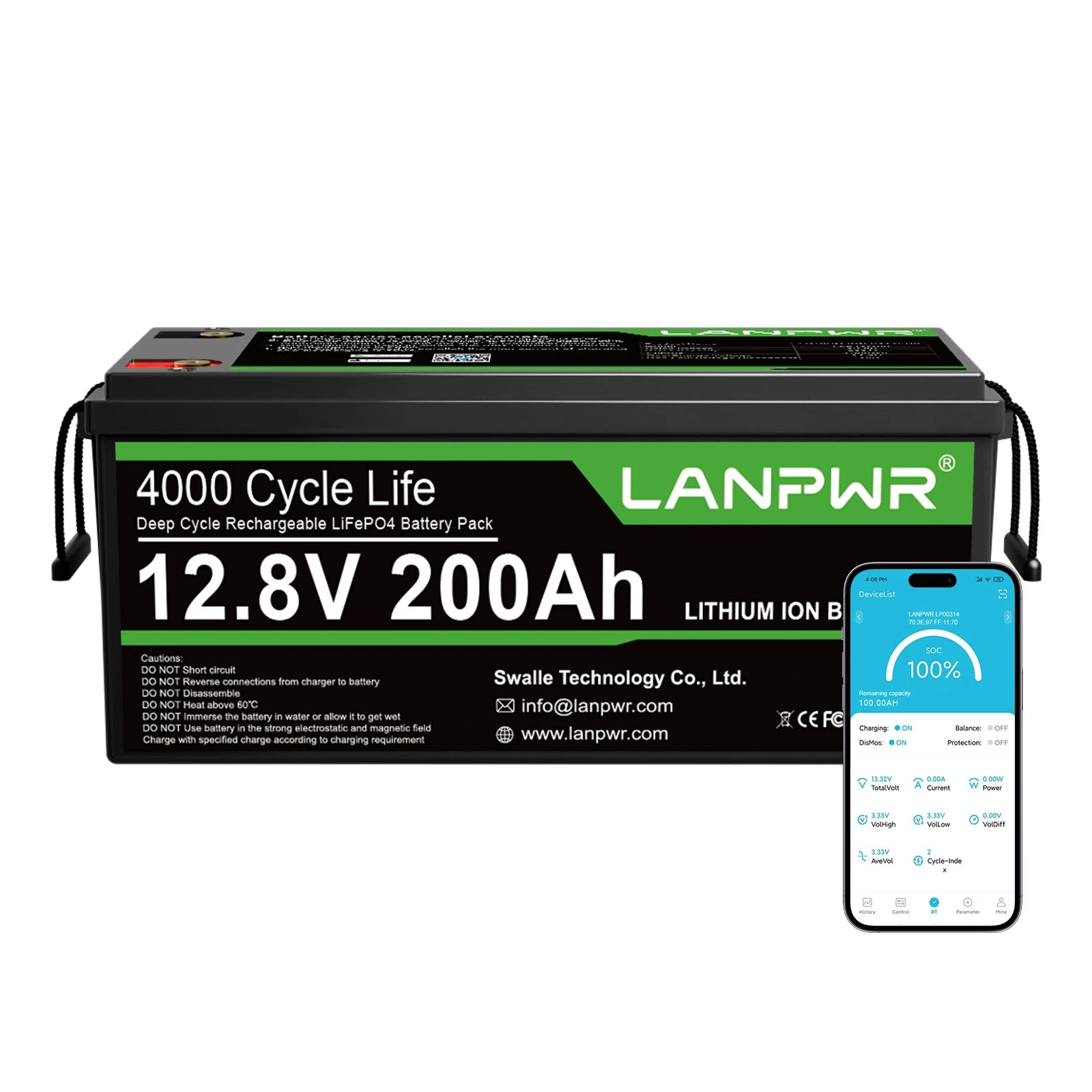
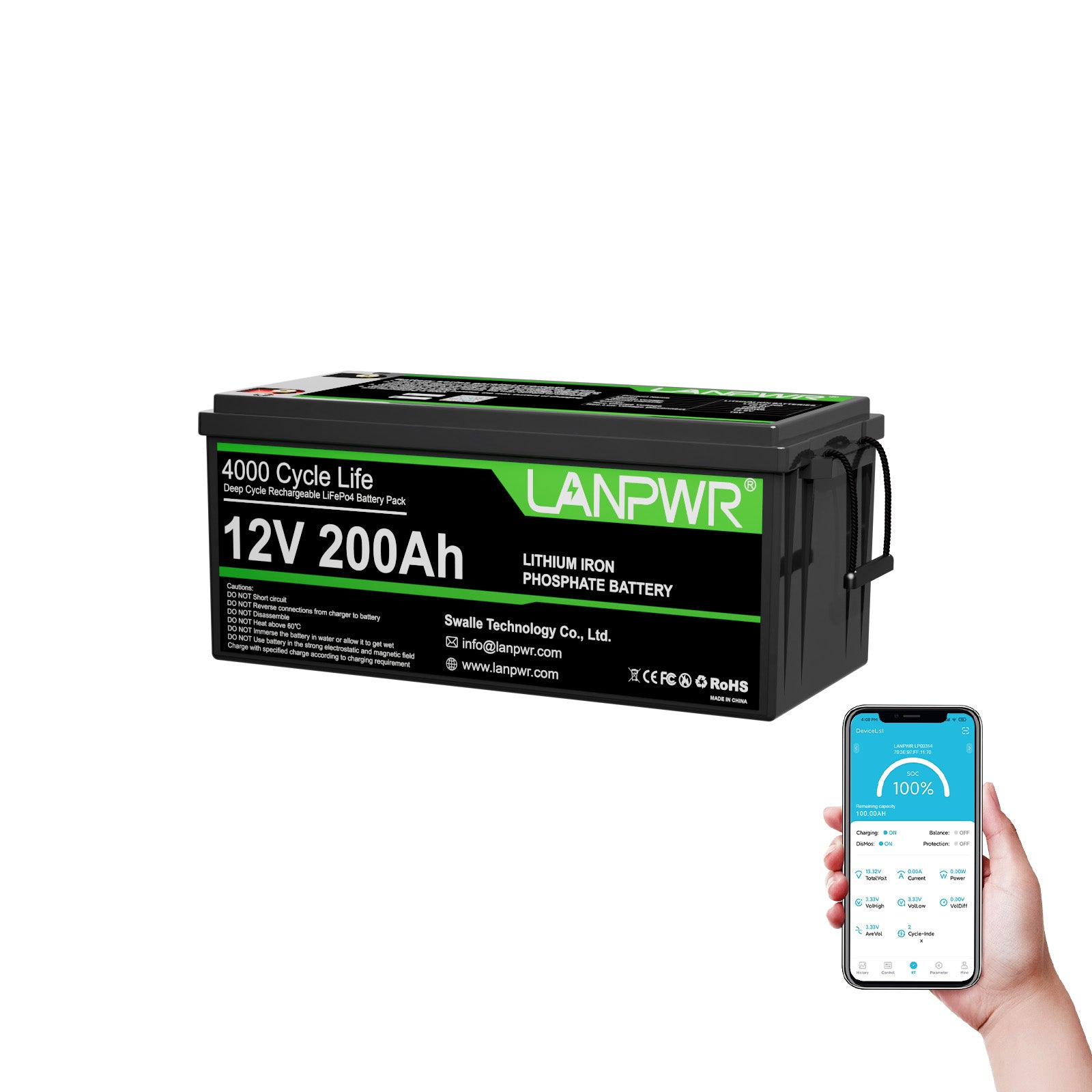
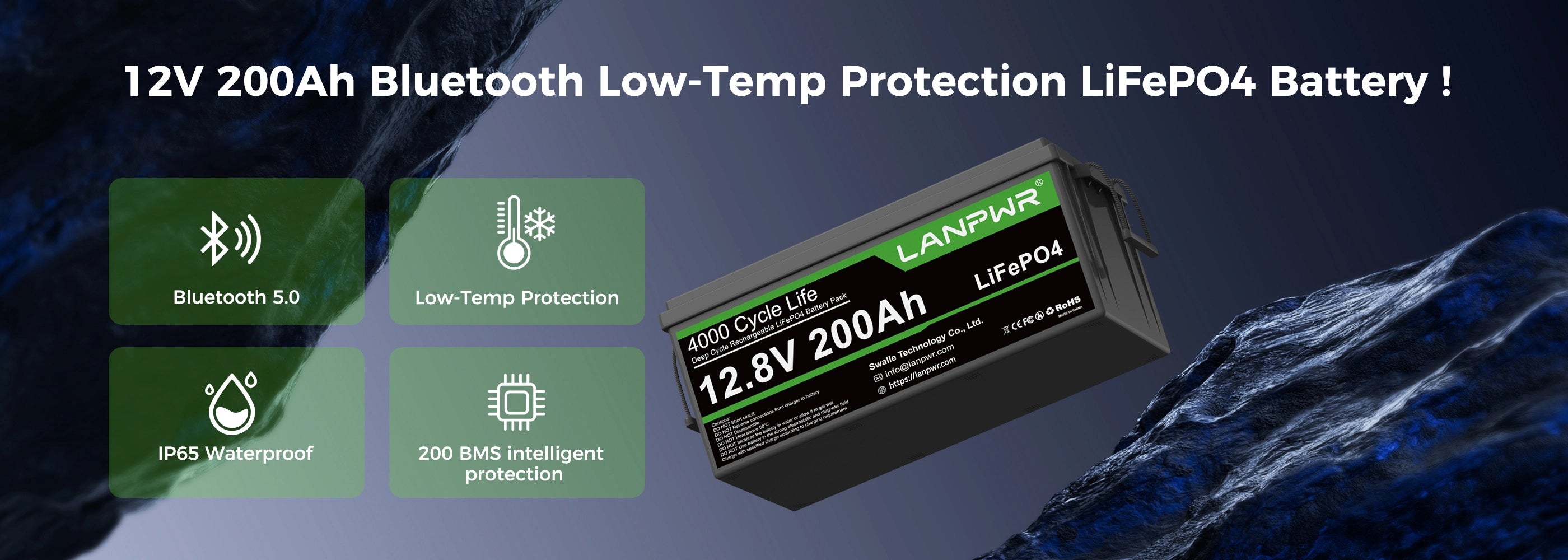
The Bluetooth feature lets you easily check your battery’s state of charge (SOC), voltage, current, cycle life, and temperature in real-time. Simply install the Xiaoxiang Electric App, turn on Bluetooth, and select your battery. No additional hardware required.
A:
This battery is marketed as a 12V LiFePO₄ battery, which is the industry-standard classification.
Its nominal voltage is 12.8V, based on the chemistry of LiFePO₄ cells.
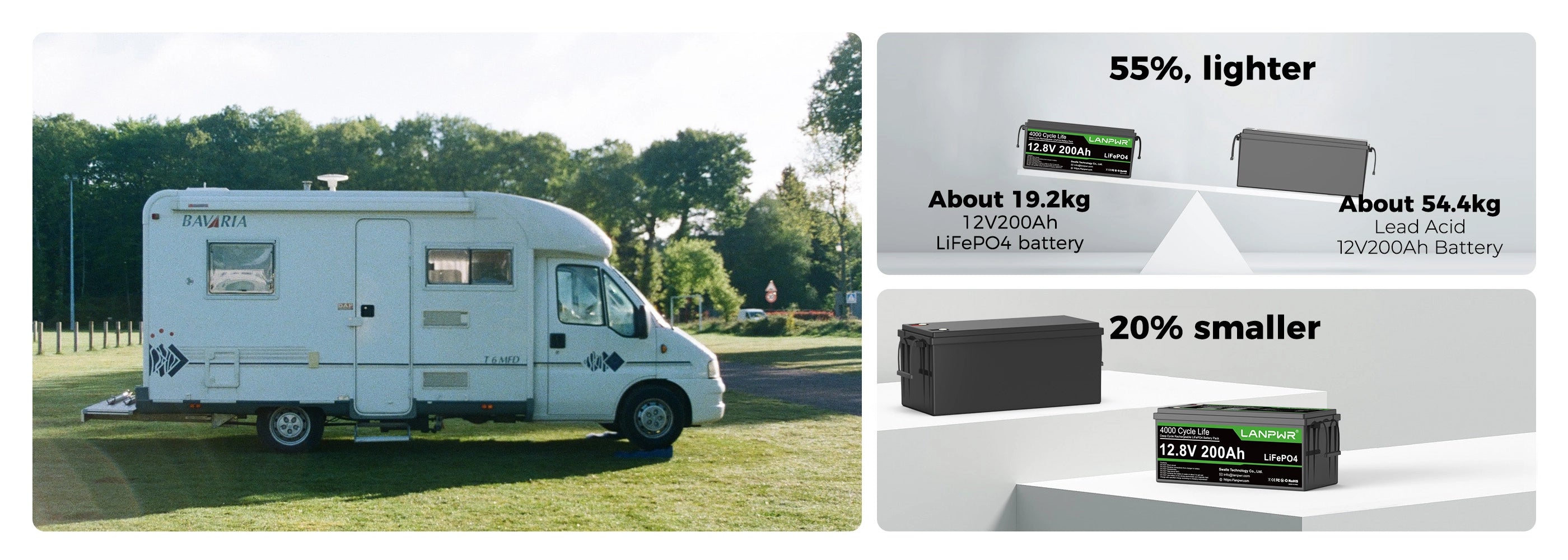
This makes it a direct drop-in replacement for traditional 12V lead-acid batteries, while providing more stable voltage and usable energy.
To calculate the runtime of your 12V 200Ah battery, use this formula:
Run Time (hours) = Battery Capacity (Ah) ÷ Current (A)
The higher the discharge rate (more amps used), the shorter the battery will last.
For example:
At 10A, a 200Ah battery can last up to 20 hours.
At 50A, it will last about 4 hours.
A:
Yes, LiFePO4 chemistry is widely regarded as one of the safest lithium battery technologies available. LANPWR lithium cells are certified by UL, FCC, CE, RoHS, and UN38.3, ensuring high-quality standards and safety.
Each LANPWR LiFePO4 battery is equipped with an internal Battery Management System (BMS), which helps protect the battery from:
Under-voltage during discharge
Over-voltage during charge
Over-current during discharge
Over-temperature during both charge and discharge
Short-circuit protection
These protections reduce the risk of damage and enhance overall safety.
Furthermore, LANPWR LiFePO4 Lithium batteries have been tested to be free from the risk of fire, and electric shock in harsh environments.
A:
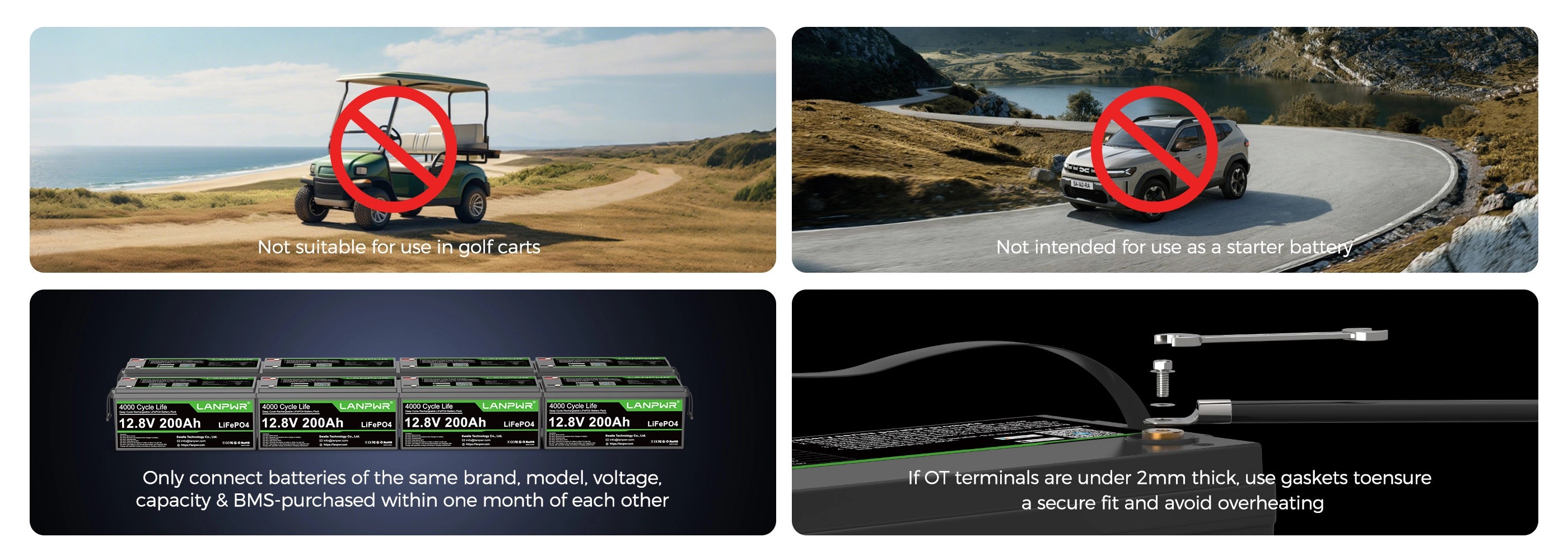
No, the LANPWR 12V 200Ah LiFePO4 battery is designed for energy storage only and is not suitable for starting engines or devices. Using it for such purposes could damage the battery. For starting applications, consider our LANPWR 12V sodium-ion starting battery series.
A:
Yes. The LANPWR 12V 200Ah Plus LiFePO₄ battery is well suited for 12V trolling motors.
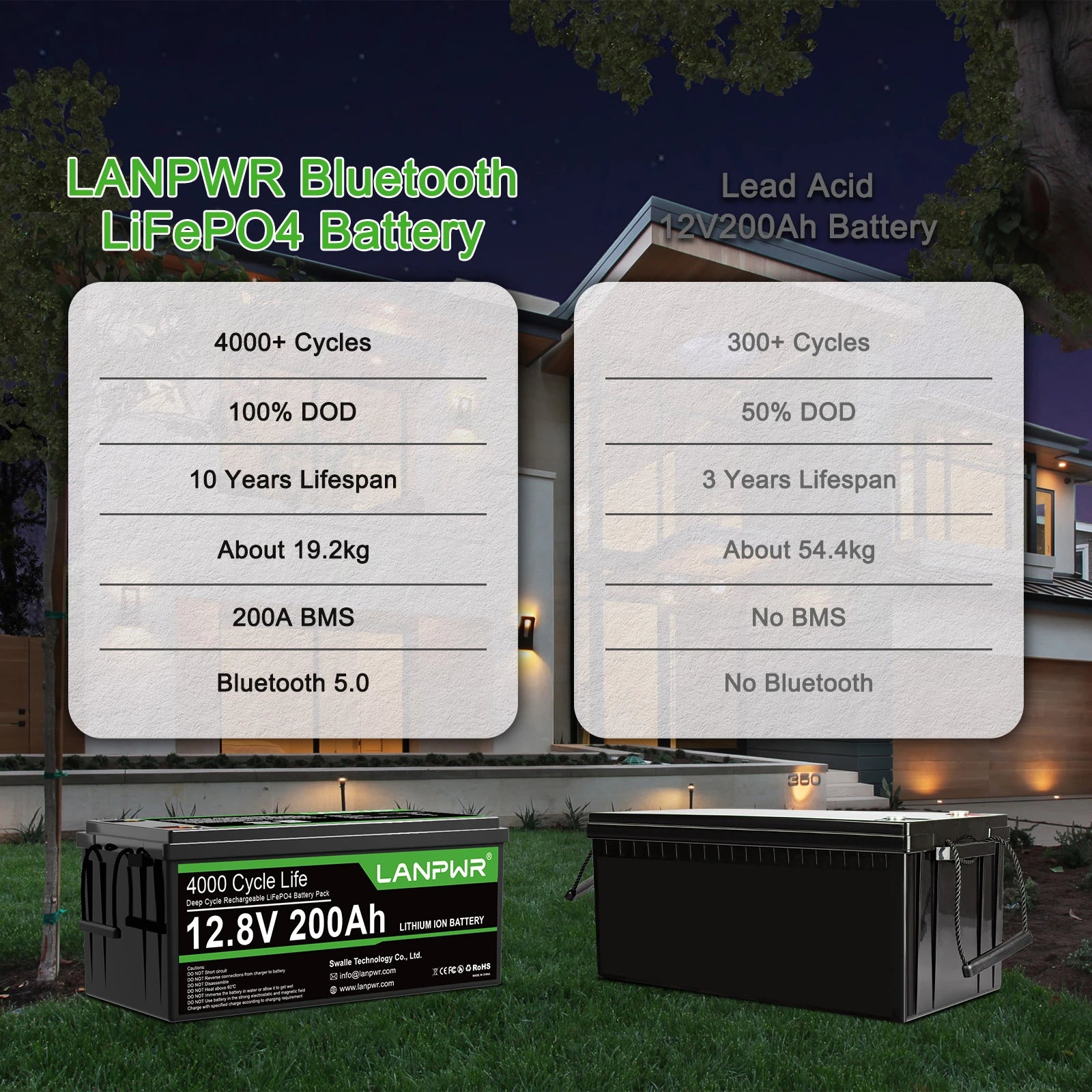
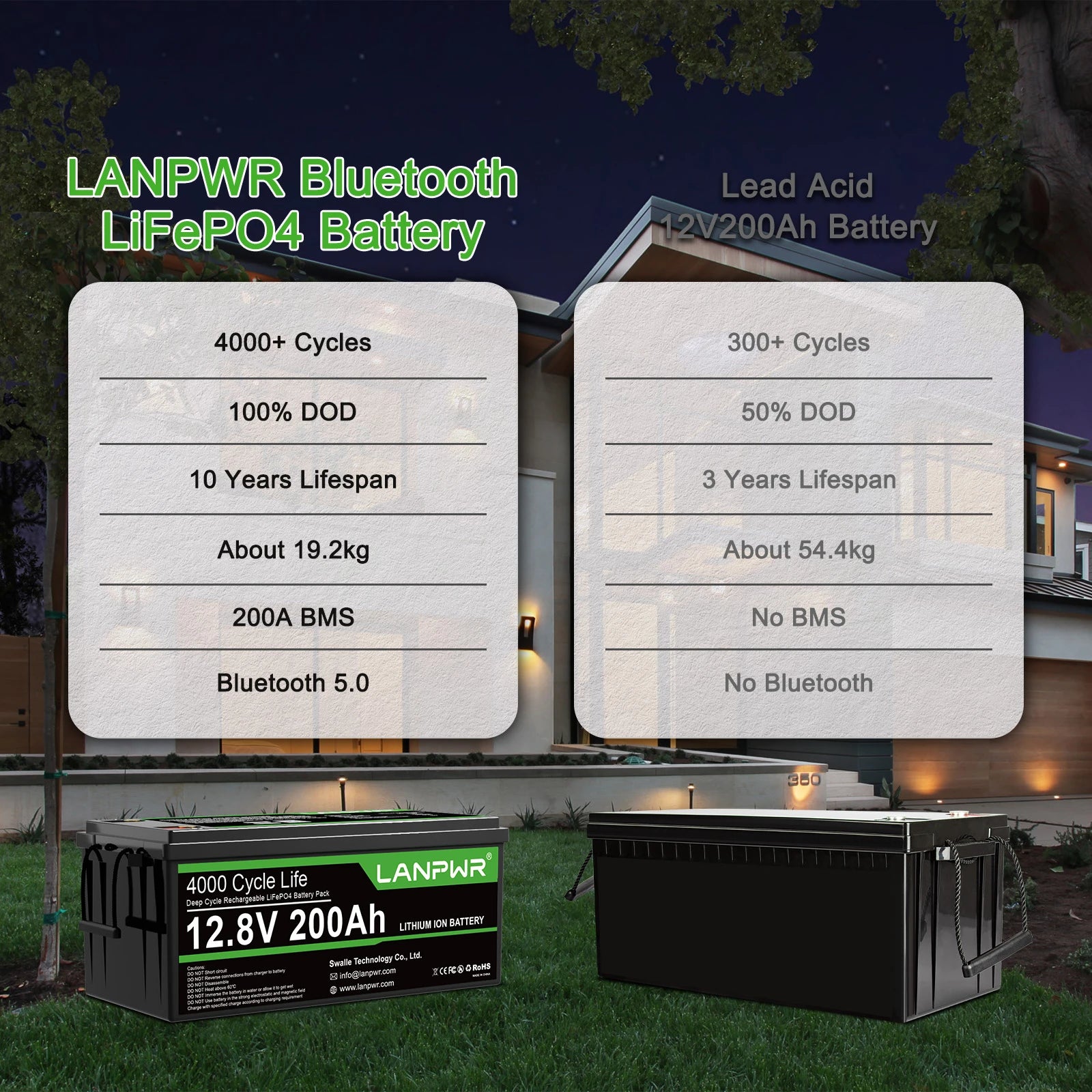
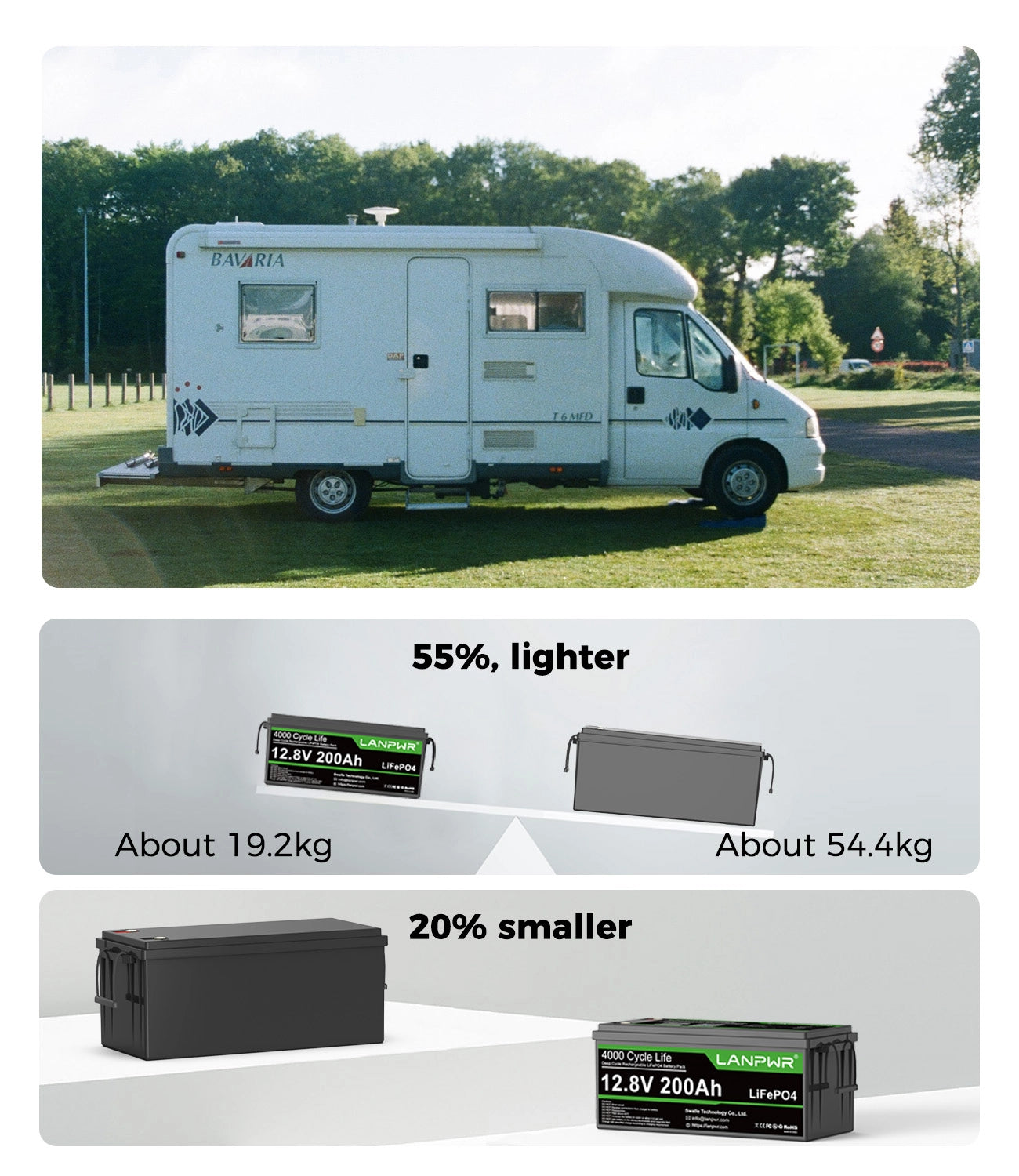
Compared to lead-acid batteries, LiFePO₄ batteries:
A:
LiFePO₄ batteries have a flat discharge voltage curve.
Unlike lead-acid batteries, which lose voltage steadily as they discharge, the LANPWR lithium battery maintains near-nominal voltage through most of its usable capacity.
As a result:
A:
Yes. The LANPWR 12V 200Ah battery is suitable for:
Its deep-cycle capability, stable voltage output, and long service life make it ideal for daily use in these systems.
A:
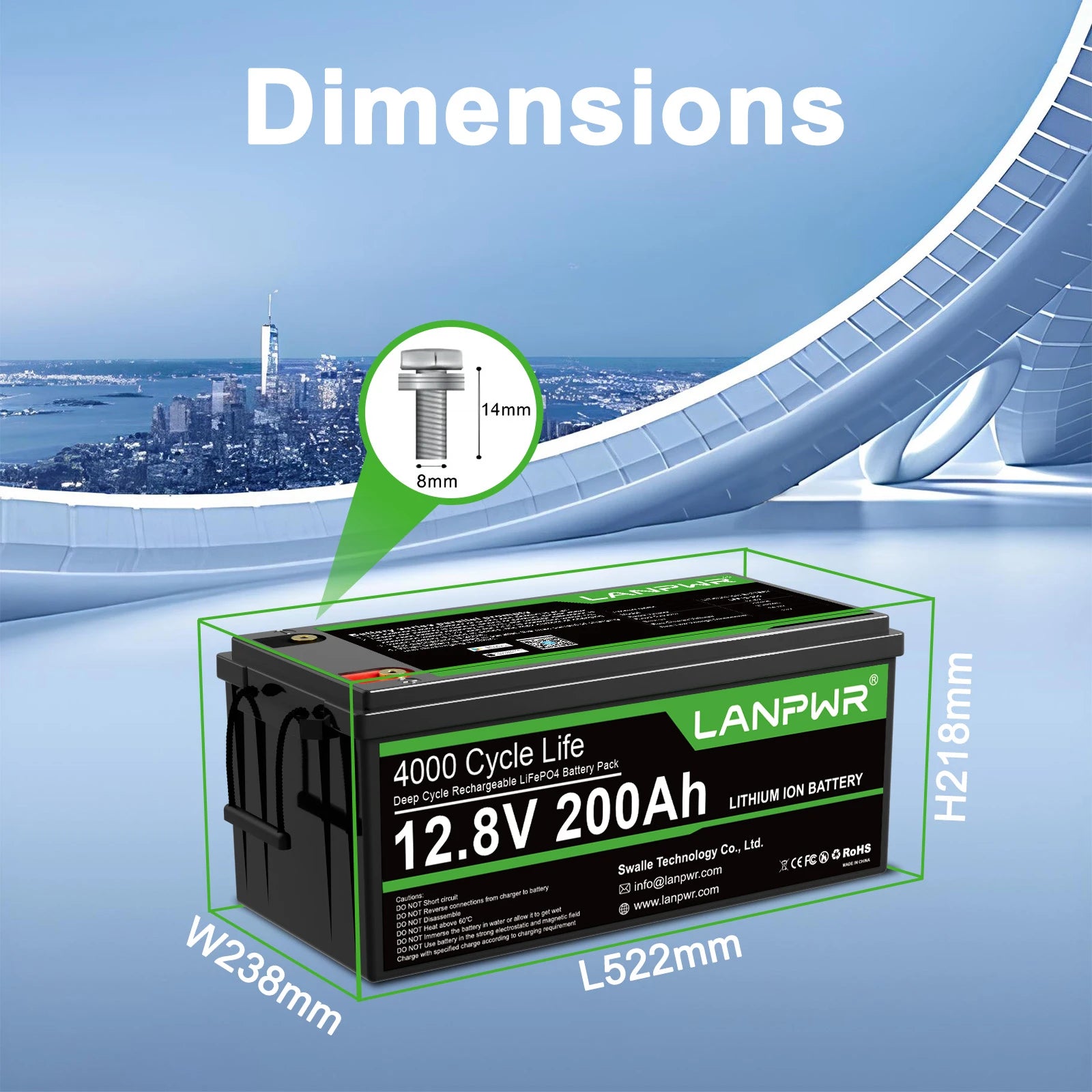
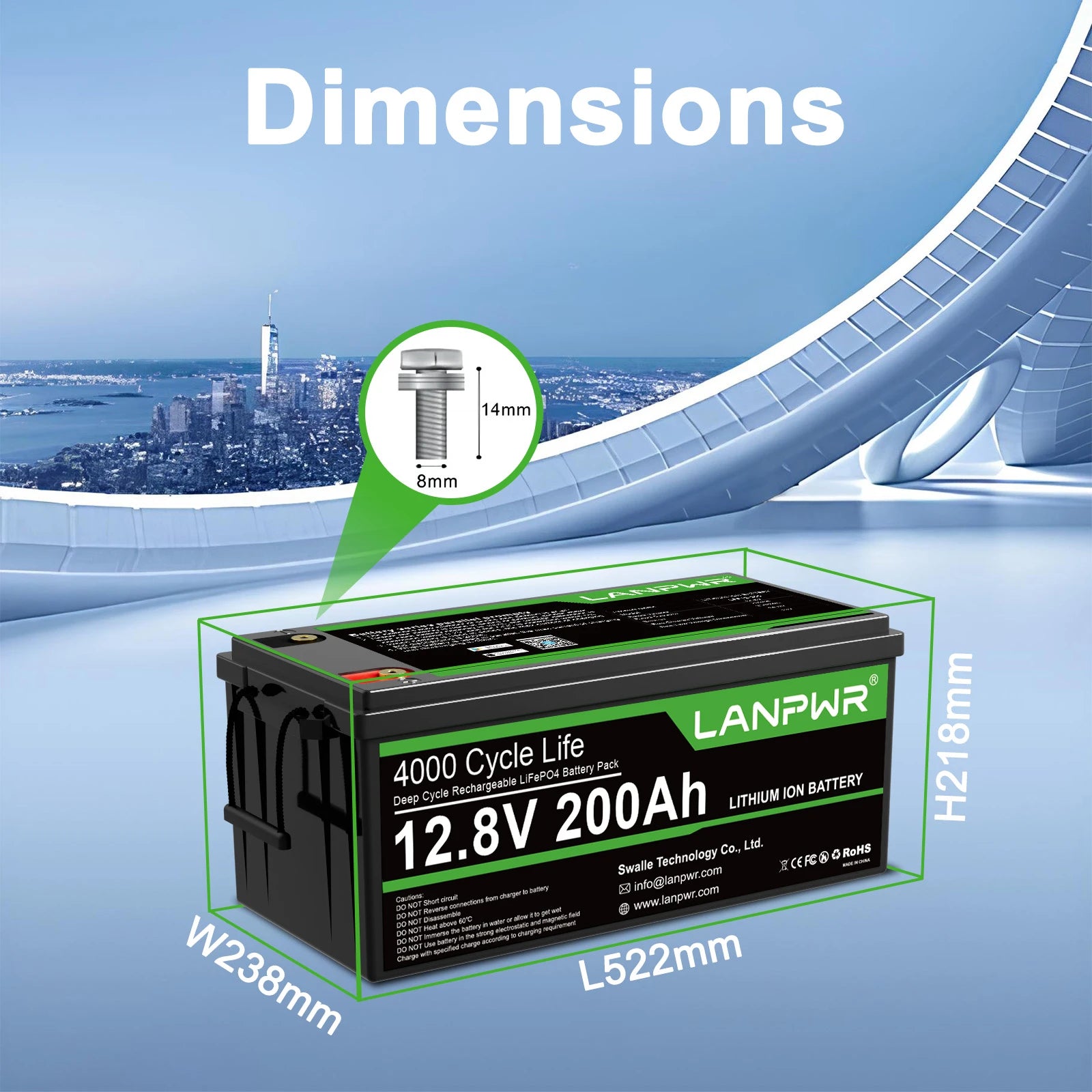
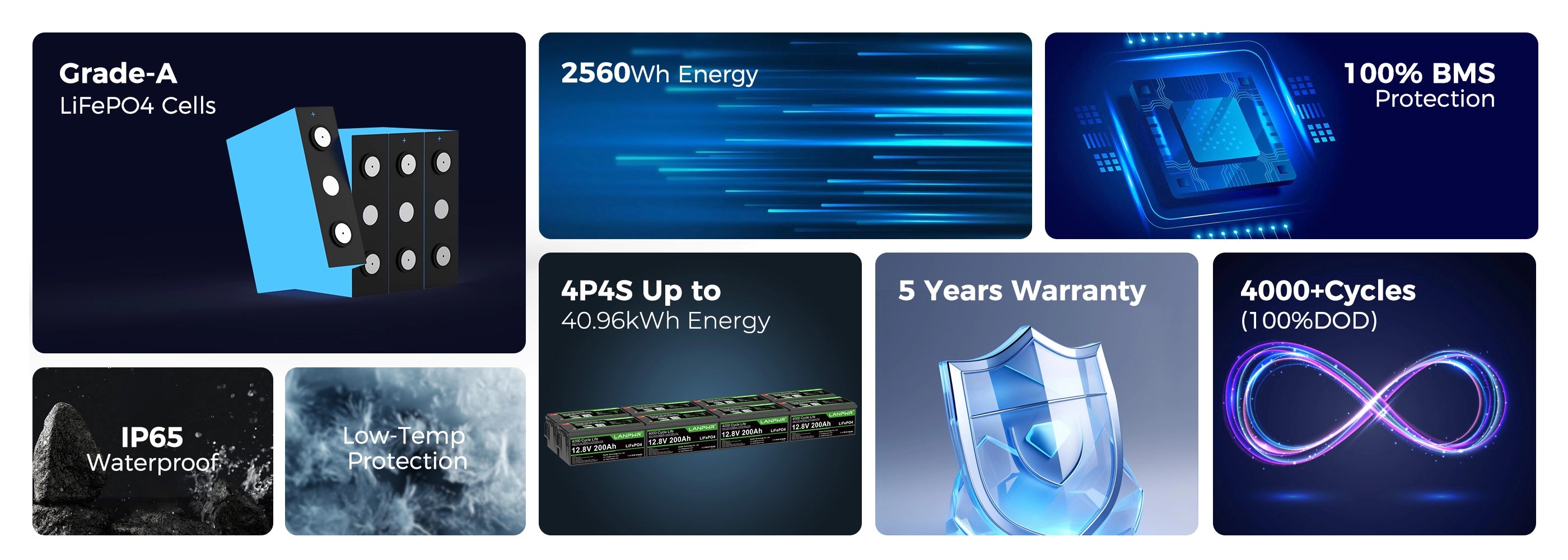
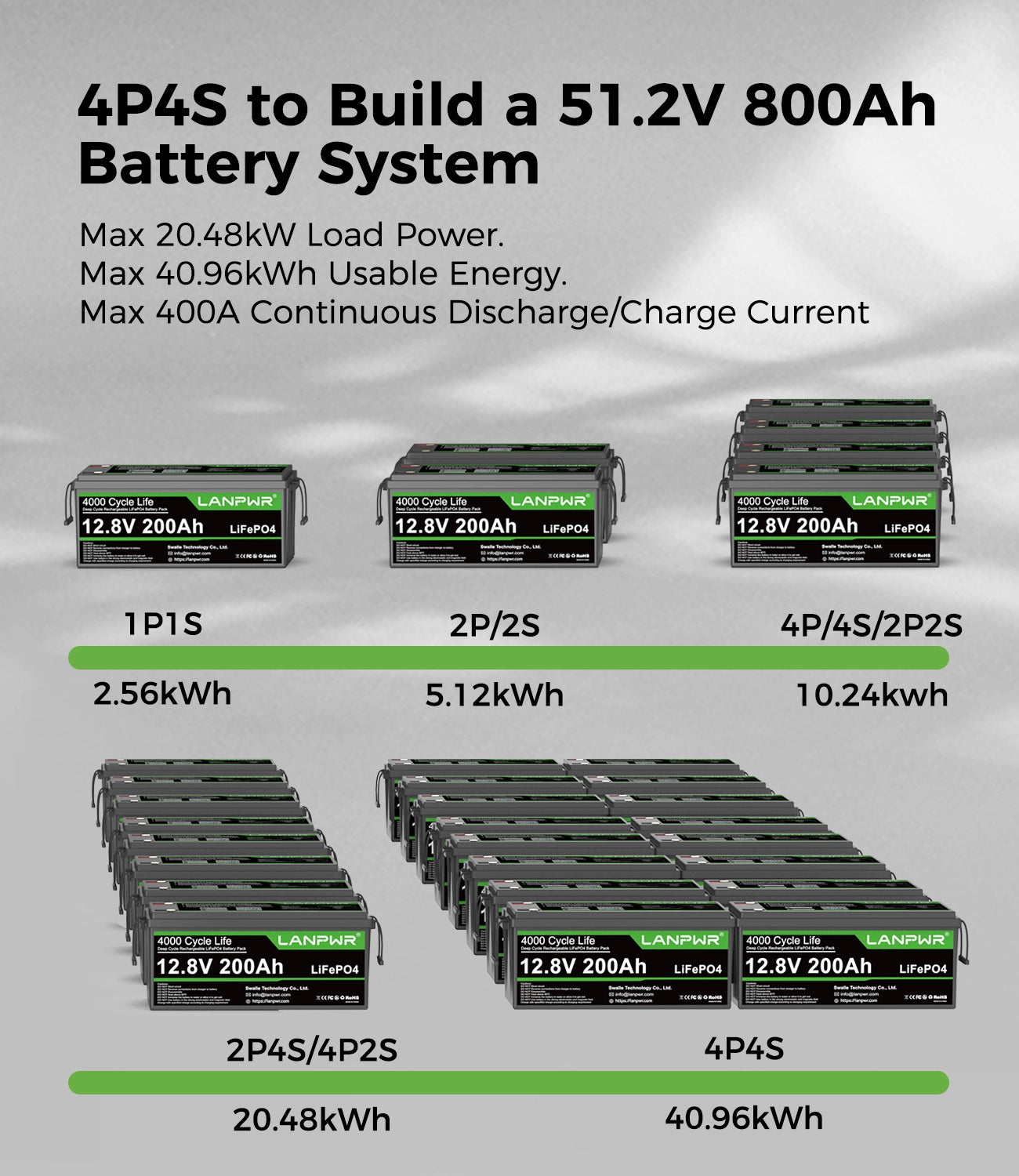
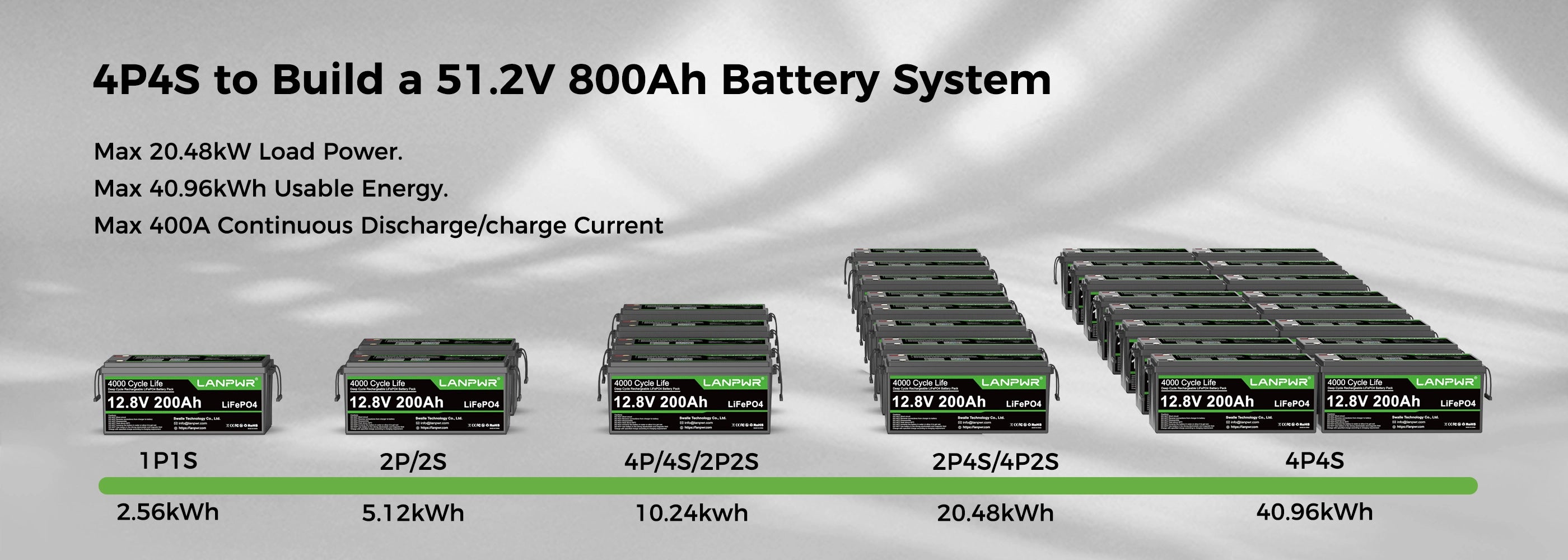
Yes, you can connect LANPWR 12V 200Ah batteries in parallel or series to expand capacity and voltage. The maximum configuration is 4S4P, meaning up to 4 batteries in series and 4 batteries in parallel.
Examples:
2 batteries in parallel = 12.8V 400Ah
4 batteries in parallel = 12.8V 800Ah
4 batteries in series (4S) = 51.2V 200Ah
Important notes:
Use identical batteries for balanced performance
Keep cable lengths equal for optimal power flow
Add fuses or circuit protection for safety
A:
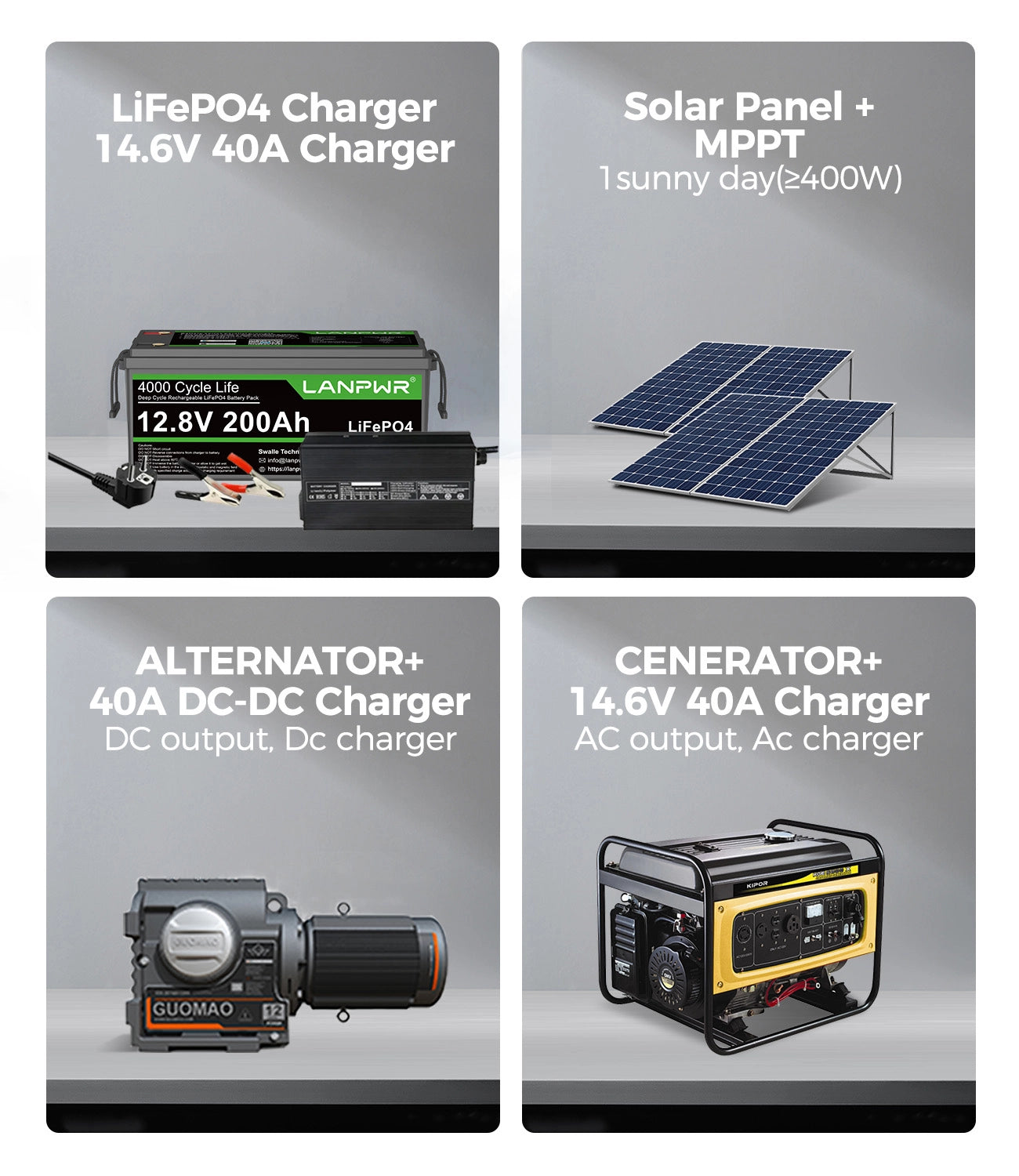
In many cases, yes, but charger compatibility depends on its voltage settings.
LiFePO₄ batteries typically require:
For best performance and battery life, a charger with a dedicated LiFePO₄ charging profile is recommended.
A:
Yes, as long as the charging source is properly regulated.
Proper regulation helps protect the battery and ensures safe charging.
A:
The built-in Battery Management System (BMS) is designed to protect the battery itself, not the connected devices.
It provides protection against:
If unsafe conditions are detected, the BMS will automatically disconnect the battery.
A:
The battery features a sealed enclosure that protects against dust and water splashes.
However, it is not designed for full submersion.
For marine environments, it is recommended to:
A:
Yes, if accurate state-of-charge information is required.
Because LiFePO₄ batteries maintain stable voltage, voltage-based indicators are not accurate.
A shunt-based battery monitor (coulomb counter) is recommended for precise capacity tracking.
Ładowanie